Skip to content
Boost Your Business: Local Lead Generation Tactics That Work
Local Lead Generation: The Complete Playbook for Small Business Growth
Local lead generation pulls nearby shoppers and service-seekers into your sales funnel and turns them into paying customers by aligning search, social, and paid channels with local signals. This guide walks the whole journey—from discovery to booking—explaining why proximity and intent boost conversion rates and which tactics will reliably acquire customers in 2024. You’ll get hands-on local SEO steps, social and paid-ad blueprints, content and lead-magnet templates, plus CRM + AI workflows that cut lead leakage and speed responses. We map concrete actions—optimizing your Google Business Profile, launching geo-targeted campaigns, producing hyperlocal content and short-form video, and wiring CRM automation with AI lead scoring—so you can prioritize follow-up and start driving revenue fast while trimming wasted ad spend.
What Is Local Lead Generation and Why Is It Crucial for Small Businesses?
Local lead generation means attracting and converting people who are looking for products or services in a specific geographic area, using channels that highlight proximity and purchase intent. It combines local SEO signals (maps, consistent NAP, and localized content), geo-targeted paid ads, and social engagement so your business shows up when nearby customers are ready to act. The upside: local leads usually have stronger intent and shorter sales cycles, which improves cost-per-lead and return on ad spend for small businesses. Unlike broad digital marketing, local lead gen prioritizes physical proximity, neighborhood-focused messaging, and immediate conversion actions—calls, bookings, or directions—making it essential for service-area businesses, retail locations, and franchises. That local focus should drive how you budget, craft creative, and measure acquisition performance.
Local Digital Buzz is a marketing and advertising agency based in Panama City Beach, FL that blends AI-driven systems with hands-on funnel planning to accelerate revenue. Their rapid ramp-up promise and “zero-leakage” lead management approach position them as a practical implementation partner—book a strategy session or request a Scan Business assessment if you want help accelerating execution. This vendor note points to one option without replacing the tactical how-to guidance in the sections below.
How Does Local Lead Generation Drive Customer Acquisition?
Local lead generation converts customers through a simple discovery-to-conversion path: people find your business on search or social, engage with a local asset (a GBP listing, social profile, or local landing page), then convert by calling, booking, or submitting a form. Search and maps capture active intent, social and short-form video build discovery and trust, and geo-targeted paid ads amplify timely offers inside a set radius. Each touchpoint produces measurable signals—impressions, clicks-to-call, booking completions, or form fills—that feed your CRM and inform retargeting. When each channel is tied to a clear conversion action, businesses shorten sales cycles, lift qualified lead volume, and protect budget with geo-fencing and audience segmentation.
What Are the Key Benefits of Local Lead Generation Strategies?
Local lead generation gives small businesses more predictable acquisition metrics and better unit economics by targeting nearby, high-intent prospects and cutting wasted reach. It lowers costs with radius targeting and local creative, improves conversion by meeting customers in the moment, and drives repeat business with neighborhood-specific retention tactics. Here are the core benefits you can expect.
- Higher conversion rates: Local intent produces more calls and bookings per impression than broad targeting.
- Lower wasted ad spend: Geo-targeting reduces irrelevant impressions and trims CPL.
- Faster sales cycles: Local discovery often leads to same-day appointments or store visits.
- Better lifetime value: Neighbors are easier to retain with local offers and repeat-business tactics.
Next, we’ll show how to optimize local SEO and listings so discovery and conversion happen with minimal friction.
How to Optimize Local SEO for Maximum Lead Generation?
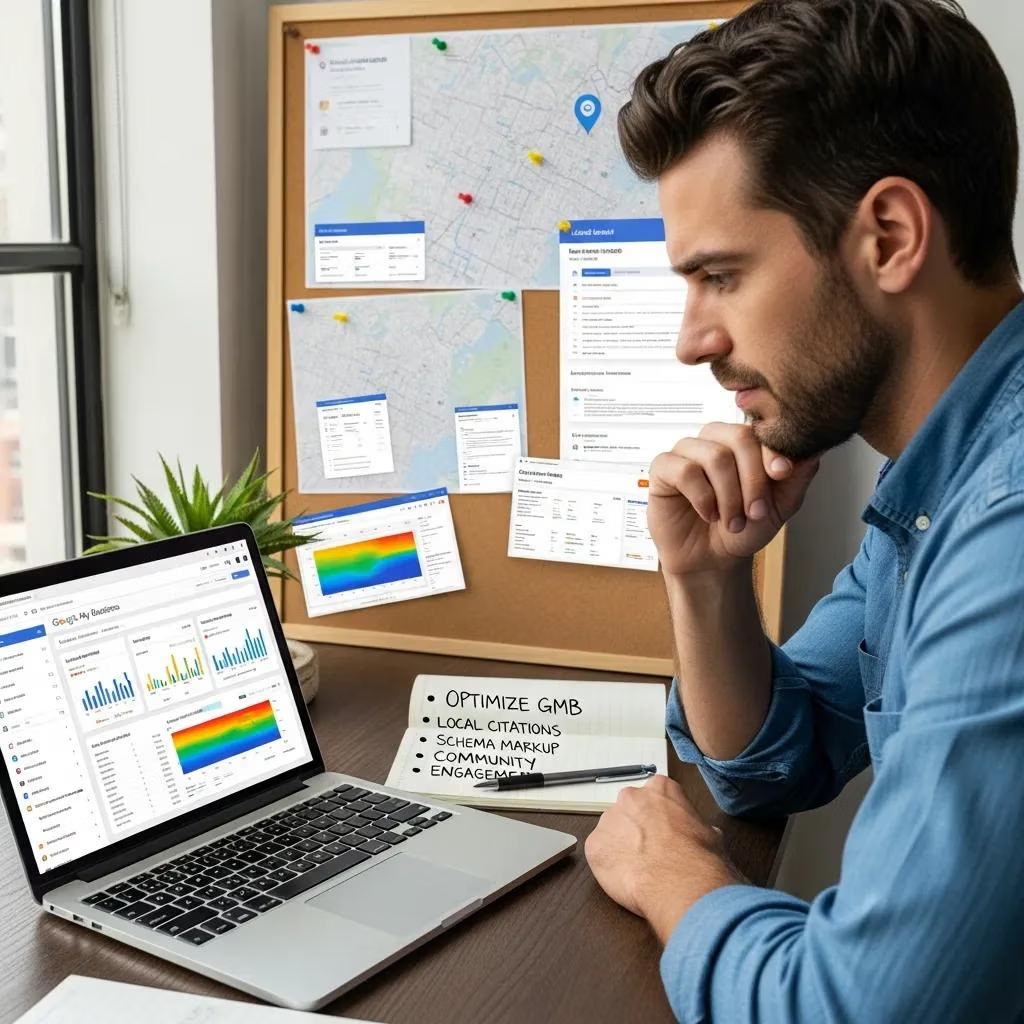
Local SEO for lead generation is about making sure you appear for proximity-driven queries and that every local touchpoint nudges people to contact you. Start with a complete Google Business Profile (GBP), consistent NAP (name, address, phone), location pages where needed, LocalBusiness schema, and a review-generation process that boosts ratings and signal recency. Local keywords and FAQ content tuned to neighborhood intent improve visibility in PAA and zero-click scenarios, while GBP posts, offers, and service sections encourage calls and bookings. Effective local SEO also includes citation monitoring, local link-building, and voice-search optimization—each step reduces friction between discovery and conversion and strengthens your presence in the local pack.
When optimizing GBP and citations, operationalize the work with a repeatable workflow and CRM integration so every contact becomes a trackable lead. Local Digital Buzz can optimize GBP and connect those actions to CRM workflows that close the loop on lead capture and tracking—helping prevent the common lead leakage that manual processes create. That integration makes GBP changes, review replies, and booking links feed directly into automated follow-up sequences.
Different local SEO elements drive specific lead outcomes and can be prioritized by their impact on visibility and contact rate.
| Local Element | Key Attribute | Lead Signal / Impact |
|---|---|---|
| Google Business Profile | Complete categories, services, posts, photos | Boosts local-pack visibility and increases calls/bookings |
| On-page Local SEO | Title tags, local keywords, schema (LocalBusiness) | Improves search relevance and organic click-through rate |
| Citations & Directories | NAP consistency across listings | Strengthens trust and map-ranking signals |
| Reviews & Reputation | Volume, recency, responses | Drives higher CTR and better conversion from local searchers |
How Do You Optimize Your Google Business Profile for Local Leads?
Optimizing your Google Business Profile means filling every field, choosing precise categories, and using service menus and booking links to turn interest into action. Start with a locality-aware business description using target keywords and a clear service list, add high-quality photos and video to lift engagement, and publish GBP posts for offers or events to create timely CTAs. Actively ask recent customers for reviews and respond to both praise and criticism to show service quality and increase review velocity. Track GBP metrics—search queries, views, calls, and direction requests—as core lead indicators and push those signals into your CRM to attribute conversions and sharpen local targeting.
What Are the Best Local SEO Tactics for Small Businesses in 2024?
For 2024, focus on voice-search optimization, hyperlocal content, and schema-first on-page work to capture new local intent signals from assistants and AI search services. Build localized FAQ pages structured for PAA results, add LocalBusiness and Service schema to location pages, and use conversational keyword variants that mirror voice queries. Use geo-tagged short-form video and neighborhood landing pages to build topical authority for micro-areas. Leverage AI tools to discover local keywords and create content briefs, but always edit for local nuance and factual accuracy.
Research on local SEO for retailers underscores the impact of local optimization on organic traffic and conversions, highlighting practical recommendations for better placement in the Local Pack.
Local SEO for Retailers: Boosting Organic Traffic and Conversions
The research aims to show why local optimization matters for retailers’ visibility in search and to offer practical recommendations for improving placement in Google’s Local Pack and increasing organic traffic and conversions, illustrated with an example of a Ukrainian retailer.
Business optimization in the digital age: Insights and recommendations, A Natorina, 2020
Which Social Media Marketing Strategies Generate Local Leads Effectively?
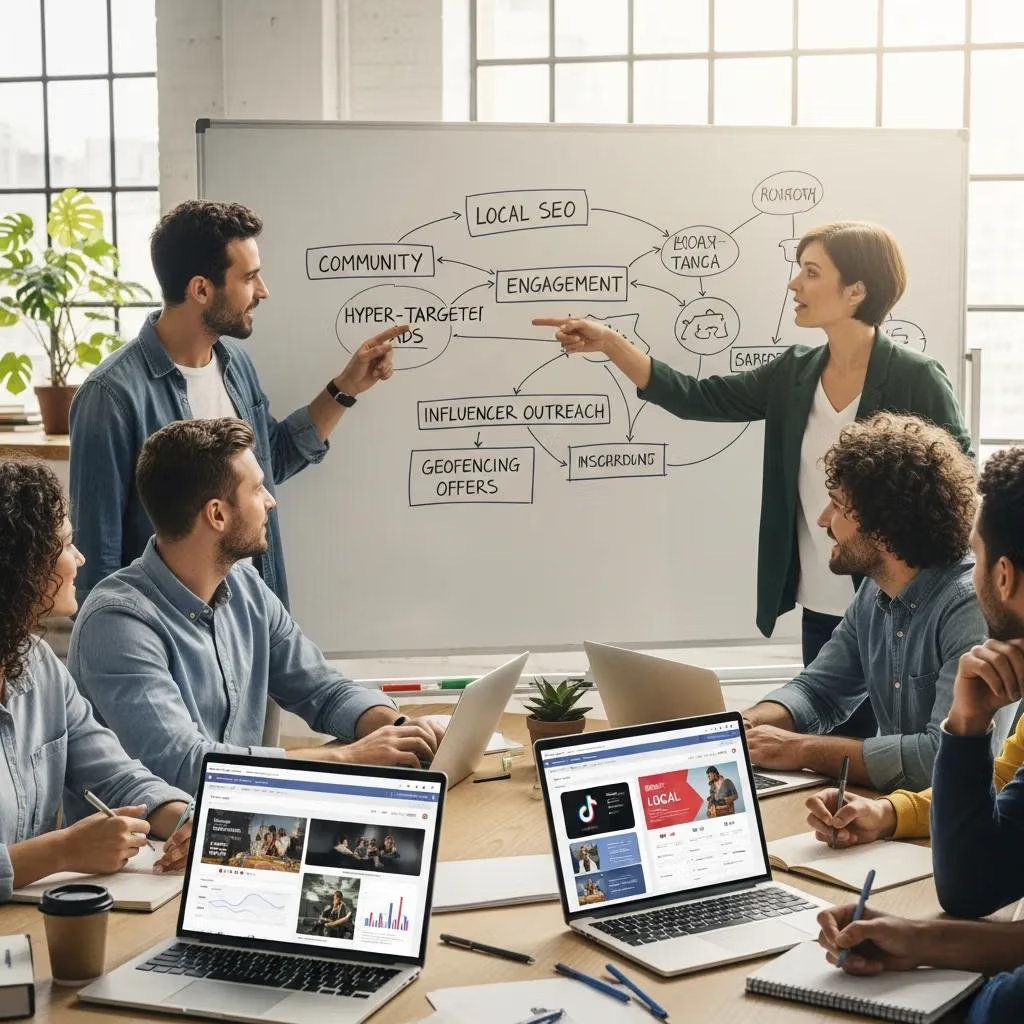
Social media for local lead gen focuses on formats and creative that prompt immediate local actions—calls, DMs, booking links, and store visits—while building community trust. Facebook, Instagram, and TikTok drive discovery via geo-targeted ads, local groups, and short-form video that highlights proximity, offers, and real customer stories. Organic tactics include joining community groups, partnering with neighborhood micro-influencers, and posting behind-the-scenes content that ties your business to the area. Paid social works well with lookalike audiences seeded by local customer lists, then tightened with radius targeting and zip-code segmentation to keep reach local.
Below are four high-impact social tactics that reliably generate local leads:
- Use Facebook Lead Ads with instant autoresponders to capture and convert intent quickly.
- Publish Instagram Reels that showcase local landmarks and use geotags to surface in neighborhood feeds.
- Participate in local groups and comment threads to build trust and guide prospects to booking links.
- Run short-term promos to drive foot traffic with promo codes and appointment CTAs.
These tactics turn discovery into action; the next subsections explain how to structure Facebook lead ads and short-form video programs to maximize local response.
How to Create High-Converting Facebook Lead Ads for Local Businesses?
High-converting Facebook lead ads use an offer-first creative formula, tight local targeting, and instant follow-up to reduce lead decay. Use a short headline that states the local offer, an image or video with a recognizable neighborhood landmark, and a one-line value statement that answers “what happens next.” Target by radius (3–15 miles), layer local interests, and test a small set of creatives to find what works. Crucially, connect the form to an autoresponder and CRM to send an instant confirmation and a booking link or callback option—fast follow-up meaningfully increases qualified conversions.
How Can Instagram Reels and Short-Form Videos Boost Local Engagement?
Instagram Reels and short-form video boost local visibility when they tell relatable stories, use geotags, and include micro-influencer placements that make your business part of local conversations. Showcase real service moments, quick customer testimonials, and neighborhood events to build trust with nearby viewers. Post consistently (3–5 reels per week), include a clear CTA like “DM to book” or “Link in bio to schedule,” and pin contact or booking links for easy access. Short-form video amplifies word-of-mouth and makes your business discoverable to both followers and local explorers browsing geotagged content.
What Paid Advertising Methods Work Best for Local Customer Acquisition?
Pick paid channels by intent, immediacy, and cost-efficiency: Google Local Service Ads for service-driven intent, geo-targeted PPC for local search demand, and Facebook lead ads for volume and audience control. Allocate budget against expected CPL and local customer lifetime value, use radius bidding, and add call tracking to measure true acquisition costs. Retarget warm visitors with local offers and combine ads with email/SMS follow-up to convert consideration-stage prospects into booked customers. Measure calls, bookings, and form fills—not impressions—to tie campaigns directly to revenue.
The table below compares local paid channels, typical cost ranges, and best-use cases to guide budget decisions.
| Channel | Typical Cost/Range | Best-Use Case |
|---|---|---|
| Google Local Service Ads | Moderate–High CPL depending on category | Immediate service hires and trust-driven searches |
| Geo-targeted PPC (search/display) | Variable; efficient for high-intent queries | Capture local search demand and direction-based queries |
| Facebook/Instagram Lead Ads | Low–Moderate CPL with strong creative | Volume-oriented lead capture and special offers |
| Retargeting (Display/Social) | Low CPL for warm audiences | Convert recent site visitors and engagers with local offers |
How to Use Google Local Service Ads and Geo-Targeted PPC Campaigns?
To get value from Local Service Ads, keep your profile thorough, service categories accurate, and hours/response expectations clear so the platform can match you to intent. For geo-targeted PPC, split campaigns by radius or ZIP, set location bid adjustments for high-value micro-areas, and write ad copy that references local landmarks or neighborhood names. Track calls with call-tracking numbers and import call conversions into analytics to identify which geographies deliver the best CPL. Use LSAs to capture immediate service intent and geo-targeted PPC to cover incremental search queries not matched by LSAs.
What Are Effective Retargeting Strategies for Local Audiences?
Effective local retargeting segments visitors by intent and recency, then serves escalating offers that increase urgency and relevance. Build audiences for recent site visitors, service-page viewers, and form abandoners, then run dynamic creative with local offers and time-limited incentives. Shorten time windows for high-intent pages (0–7 days) and extend them for awareness pages (7–30 days), progressing creative from educational to promotional. Combine retargeting with email and SMS touchpoints to close leads quickly, and always include location-specific CTAs that push users toward in-person visits or bookings.
How Can Content Marketing and Lead Magnets Attract Local Leads?
Local content and lead magnets capture contact info and trust by answering neighborhood-specific questions and needs. Local guides, event calendars, and “best of” lists attract organic traffic and social shares; coupons, limited-time offers, and downloadable local guides act as lead magnets that grow email and SMS lists. Landing pages for magnets should be short, mobile-first, highlight local relevance, and feature clear CTAs for immediate booking or calling. Promote magnets via organic search, geo-targeted social ads, local partners, and on-site signage with QR codes that send people to the landing page.
High-converting local content types include:
- How-to guides and neighborhood service pages that answer transactional queries.
- Discount vouchers and booking incentives for first-time nearby customers.
- Short-form video tutorials and event highlights that drive social discovery.
Those content approaches feed lead-magnet workflows; the next section offers templates and follow-up sequences to lift conversions.
What Types of Localized Content Convert Best for Small Businesses?
Small businesses convert best with content that matches “near me” intent and removes friction for booking or visiting. Examples: neighborhood service pages with pricing cues, local FAQs that address common objections, short video walkthroughs showing results, and event pages tied to local happenings. Strong formats include blog posts optimized for long-tail local queries, downloadable checklists that solve a neighborhood pain point, and case-study snapshots featuring nearby customers. Always pair localized content with an immediate CTA—book, call, or redeem—to turn interest into measurable leads.
How to Craft Lead Magnets That Drive Local Customer Engagement?
Build lead magnets around a clear local need and keep sign-up friction low—short forms and instant delivery boost conversions. Effective local magnets include in-store coupons, neighborhood service guides, reserved appointment time slots, and quick diagnostic checklists tailored to your service area. Follow the magnet with a 3-step automated nurture: immediate confirmation, a value-add message (tips or social proof), and a time-limited local offer to prompt booking. Use SMS for urgent follow-up and email for richer content; segment recipients by source and behavior to personalize the next ask.
How Does CRM and AI-Powered Lead Nurturing Improve Local Lead Conversion?
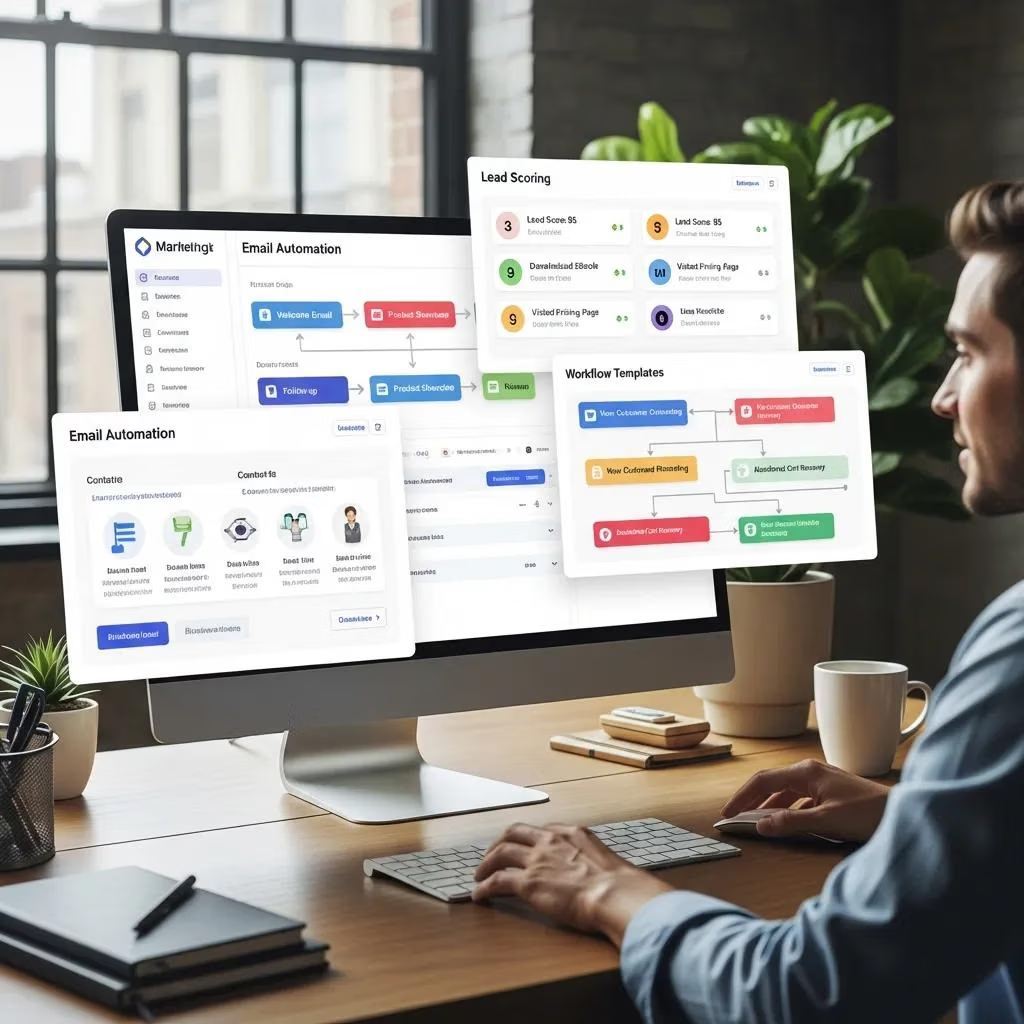
CRM automation and AI lead scoring cut response times and surface the highest-intent leads, producing measurable conversion gains and fewer missed opportunities. Automatically capture leads from GBP, forms, calls, and social ads and route them into multi-channel nurture sequences so inquiries become bookings faster. AI scoring uses behavioral, source, and recency signals to highlight prospects most likely to convert, letting teams prioritize calls and tailor offers. When implemented correctly, these systems reduce lead leakage, speed follow-up, and can lift qualified conversion rates—often in double digits when paired with rapid response workflows.
| CRM Feature | Attribute | Outcome Metric |
|---|---|---|
| Automated Lead Capture | Forms, calls, GBP integration | Faster response time; higher contact rate |
| Multi-Channel Sequences | Email + SMS + Voicemail drops | Increased engagement and booking completion |
| AI Lead Scoring | Behavioral + source + recency signals | Higher prioritization accuracy; improved close rate |
| Pipeline Routing | Auto-assignment to reps | Reduced lead leakage; shorter sales cycle |
This mapping shows how specific CRM features translate into measurable conversion improvements and operational efficiency.
Local Digital Buzz models a hybrid approach that combines marketing expertise with automation to deliver Zero-Leakage Lead Management and AI-driven prioritization. For teams seeking a faster path to results, Local Digital Buzz offers a 7-day activation plan that aligns GBP optimization, geo-targeted ads, and CRM triggers to start generating hyper-qualified leads quickly. Use that playbook as a reference: prioritize capture, automate immediate confirmations, and apply AI scoring to route the leads that matter most.
What Are the Benefits of Automated Email and SMS Sequences for Local Leads?
Automated email and SMS sequences guarantee fast follow-up, provide timely value, and move leads toward booking with a predictable cadence and personalization. A simple 3-step sequence sends an immediate confirmation, a follow-up message with local tips or social proof, and a time-limited local offer to prompt booking. SMS gets high open rates for urgent messages like same-day availability or confirmations, while email delivers richer content and reminders. Segment by service and locality to boost relevance—faster, personalized sequences reduce no-shows and increase conversion through consistent engagement.
How Does AI Lead Scoring Enhance Lead Management and Sales Pipelines?
AI lead scoring combines engagement signals—recency, pages visited, source channel, plus demographic markers—to create a priority score that drives routing and outreach. Sales teams call the highest-score leads first, send tailored offers to mid-score prospects, and nurture low-score contacts via drip sequences, focusing human effort where it will earn the most revenue. Typical inputs include page visits, form fields, time-of-day activity, and local intent signals; integrated with CRM triggers, scoring speeds up routing and ensures top prospects get immediate, relevant outreach.
Using LinkedIn for lead generation requires profile optimization, targeted content, and deliberate outreach—an approach well-suited for small businesses seeking high-quality leads.
LinkedIn Lead Generation: Strategies for Small Businesses
ABSTRACT: This review presents LinkedIn strategies for lead generation, covering profile optimization, content marketing, engagement, targeted outreach, paid ads, and data-driven optimization. It synthesizes recent, peer-reviewed articles and industry reports to identify best practices for generating and converting high-quality leads on LinkedIn.
Digital marketing on LinkedIn: in-depth strategies for lead generation, S Saeidi, 2024
Implementing Your Local Lead Generation Strategy
Turn your local lead-gen plan into action in four phases: audit and setup, localized content and GBP completion, paid campaigns and social activation, then CRM automation and measurement. Start by auditing GBP, citations, and tracking so every lead source is instrumented; then run a priority test campaign tied to a simple offer and automated follow-up. Use a measurement loop to optimize creative, offers, and radius targeting by tracking CPL and conversion rate. For teams that prefer outside help, Local Digital Buzz pairs strategy with project management and automation to scan performance and run a focused activation without taking control away from your team.
- Audit and fix GBP, citations, and analytics tracking.
- Launch localized content, short-form video, and a lead-magnet promotion.
- Run geo-targeted paid campaigns with immediate follow-up automation.
- Apply CRM automation and AI lead scoring to prioritize and route leads.
Follow this sequence to build a repeatable, measurable pipeline from discovery to booking.
How Does AI Lead Scoring Enhance Lead Management and Sales Pipelines?
AI lead scoring refines prioritization by turning engagement data into actionable scores that drive next-best-action workflows in your CRM. It speeds routing by auto-assigning top scores to immediate outreach and triggering different nurture cadences for mid- and low-score leads so your resources align with expected value. Typical scoring inputs include source channel, time since inquiry, pages viewed, and local identifiers—data that enables scalable, data-driven decisions. When paired with automated sequences and call routing, AI scoring increases conversion velocity and reduces wasted outreach on low-probability leads.
- Faster routing: Highest-score leads get immediate calls or SMS.
- Better personalization: Segmented offers for different score bands increase relevance.
- Resource efficiency: Teams focus on leads with the highest expected ROI.
This completes the guide and gives a practical pathway to capture more local business leads using SEO, social, paid channels, content, and modern CRM automation.
Frequently Asked Questions
What are the most effective local lead generation channels for small businesses?
The most effective channels are Google Business Profile (GBP), social platforms like Facebook and Instagram, and paid options such as Google Local Service Ads and geo-targeted PPC. GBP drives local visibility, social builds community trust and discovery, and paid ads capture immediate intent. Using these channels together covers different stages of the buyer journey and improves overall lead flow.
How can small businesses measure the success of their local lead generation efforts?
Track KPIs like conversion rate, cost per lead (CPL), and return on ad spend (ROAS). Use Google Analytics for site behavior, GBP insights for local visibility, and a CRM to attribute leads and follow-up performance. Combine those sources to see which channels and campaigns deliver the best CPL and lifetime value, and optimize accordingly.
What role does customer feedback play in local lead generation?
Customer feedback builds credibility and trust—two critical factors for local conversions. Positive reviews and testimonials influence nearby prospects, while timely responses to reviews show you care. Solicit feedback through post-service messages or receipts, then use insights to improve offerings and showcase social proof in your listings and ads.
How can small businesses effectively use content marketing for local lead generation?
Create localized content that addresses community needs—how-to guides, event listings, and neighborhood service pages. Optimize for local keywords and use lead magnets like downloadable guides or exclusive offers to capture contact information. Promote that content via organic search, geo-targeted social ads, and local partnerships to drive consistent, relevant traffic.
What are some common mistakes to avoid in local lead generation?
Common errors include leaving your Google Business Profile incomplete, ignoring reviews, not tracking lead sources, using generic messaging that doesn’t resonate locally, and overlooking mobile optimization. Also, failing to provide a clear call-to-action can cost you leads—make the next step obvious.
How can automation improve local lead generation processes?
Automation speeds lead capture, follow-up, and nurturing—reducing response time and lead leakage. Automated messages confirm inquiries instantly, segment leads by behavior, and move prospects through tailored sequences. Integrating automation with your CRM lets you track interactions and refine tactics based on data, improving conversion rates over time.
Conclusion
Local lead generation is one of the most efficient ways for small businesses to grow. By combining focused local SEO, community-first social, targeted paid campaigns, and smart CRM automation with AI scoring, you can attract nearby, high-intent customers and convert them reliably. Use the tactics in this guide to reduce wasted spend, speed follow-up, and build a predictable local sales pipeline. Ready to get started? Apply these steps, measure results, and iterate toward sustainable revenue growth.