Author: Joshua Fleming

  • How to Boost Small Business SEO with These 5 Quick Changes

    How to Boost Small Business SEO with These 5 Quick Changes


    Small business SEO is the cornerstone of digital marketing success for any small business trying to improve their online presence. By leveraging SEO, small businesses can see significant improvements in website rankings, increased web traffic, and ultimately, more customers.

    If you’re looking to quickly improve your website ranking, here are five changes you can make:

    1. Ensure technical SEO is up-to-date.
    2. Conduct thorough keyword research.
    3. Optimize on-page content.
    4. Focus on local SEO practices.
    5. Build quality backlinks from reputable sources.

    These steps are proven to boost a small business’s online visibility and attract more potential customers.

    As a digital marketing expert and former United States Marine, I’m Joshua Fleming, and I’ve dedicated my career to helping businesses thrive through small business SEO. My experience includes working with both local businesses and high-profile clients to craft effective SEO strategies that drive results.

    Now, let’s dive deeper into how you can harness the power of SEO to transform your business.
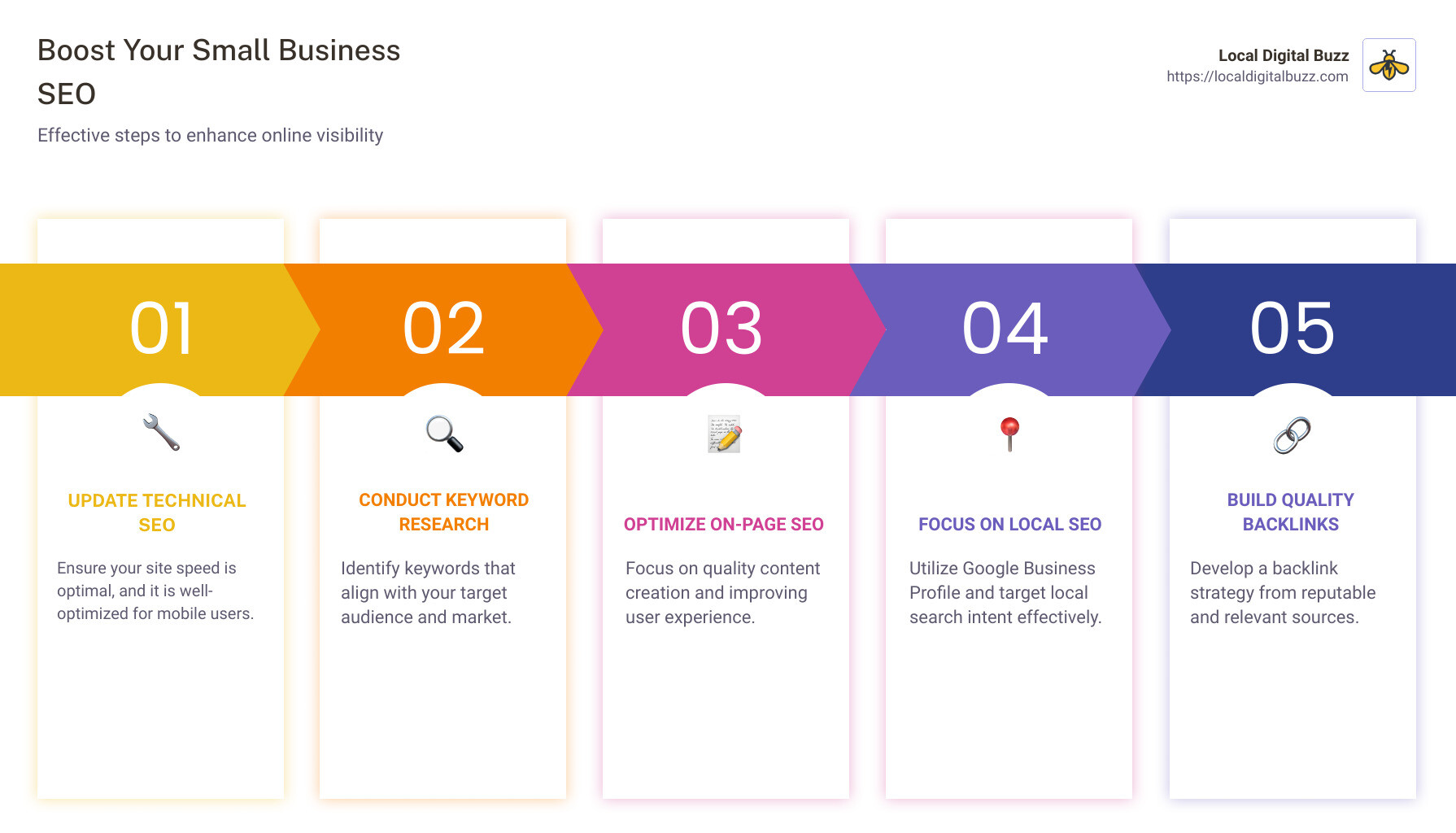
    Infographic detailing five key steps to boost small business SEO - small business SEO infographic pillar-5-steps

    Optimize Your Website’s Technical SEO

    When it comes to small business SEO, technical optimization is a crucial step. It lays the foundation for everything else. Let’s break down how to optimize your website’s technical SEO.

    Site Speed

    Site speed is a critical factor. A slow website can frustrate users and increase your bounce rate. Did you know that many visitors will leave your site if it takes more than a few seconds to load? This can hurt your search engine ranking.

    Here are three simple ways to boost your site speed:

    • Check for viruses: Viruses can slow down your site. Regularly scan your website to keep it clean.
    • Compress large files: Reduce the size of images and videos. This can make your pages load faster.
    • Upgrade your hosting plan: If your website is growing, you might need more bandwidth. An upgraded hosting plan can help.

    Mobile Optimization

    With more people using smartphones to browse the web, mobile optimization is a must. In 2023, 76% of people who searched for something nearby on their phones visited a business within a day. If your website isn’t mobile-friendly, you could miss out on local customers.

    Make sure your site looks great and works smoothly on all devices. Use a responsive design that adapts to different screen sizes. Test your website on various devices to ensure a seamless user experience.

    Technical Audit

    A technical audit is like a health check for your website. It helps you identify and fix issues that could be hurting your SEO.

    What to check in a technical audit:

    • Page titles and meta descriptions: Ensure they’re unique and relevant.
    • Page speed: Use tools like Google PageSpeed Insights to test your site.
    • Broken links and redirect chains: Fix or remove any broken links and unnecessary redirects.
    • Schema markup: Implement structured data to help search engines understand your content better.

    By addressing these areas, you can improve your website’s technical performance and boost your search engine ranking.

    With a solid technical foundation, you’re ready to move on to the next step: conducting thorough keyword research.

    Conduct Keyword Research

    Keyword research is the backbone of small business SEO. It’s about figuring out what your potential customers are searching for online. Once you know this, you can tailor your content to meet their needs and improve your keyword ranking.

    Understanding Keyword Ranking

    Keyword ranking is simply where your website appears in search engine results for specific keywords. The higher your rank, the more likely people are to visit your site. But how do you choose the right keywords?

    Using Keyword Research Tools

    There are several tools available to help you find the best keywords for your business. Tools like Google Keyword Planner, SEMRush, and Ahrefs are popular choices. They show you how often certain words are searched and how much competition there is for those words.

    Here’s a quick look at how to use these tools:

    • Identify relevant keywords: Enter words related to your business to see suggestions. For example, if you own a pet store, you might enter “dog food” or “pet grooming.”
    • Analyze search volume: Check how many people are searching for each keyword. Higher search volumes mean more potential traffic.
    • Evaluate competition: Look at how many other sites are targeting the same keywords. Less competition can make it easier to rank higher.

    Know Your Target Audience

    Your target audience is the group of people most likely to buy your products or services. When you know who they are, you can choose keywords that match their interests and needs.

    • Create customer personas: Think about your ideal customers. What are their ages, interests, and problems they need solving?
    • Use specific keywords: Instead of broad terms like “shoes,” use more specific ones like “women’s running shoes” or “kids’ hiking boots.”

    By focusing on the right keywords, you can attract the right audience and improve your chances of converting visitors into customers.

    By now, you’ve got a list of keywords that connect with your audience. Next, we’ll explore how to improve on-page SEO to make the most of these keywords.

    Improve On-Page SEO

    Once you’ve nailed down your keywords, it’s time to focus on on-page SEO. This involves optimizing various elements on your website to improve its ranking in search results. Let’s explore three key areas: content creation, internal links, and user experience.

    Content Creation

    Creating high-quality content is essential for effective small business SEO. Your content should be relevant, informative, and engaging. Here’s how to do it:

    • Focus on your audience: Write content that answers your customers’ questions or solves their problems. This builds trust and positions your business as an authority.
    • Use keywords naturally: Incorporate your chosen keywords into your content, but avoid keyword stuffing. Keywords should fit naturally within the text to maintain readability.
    • Visual appeal: Break up text with images, videos, or infographics to make your content more engaging. For example, a hair salon might include before-and-after photos of hairstyles.
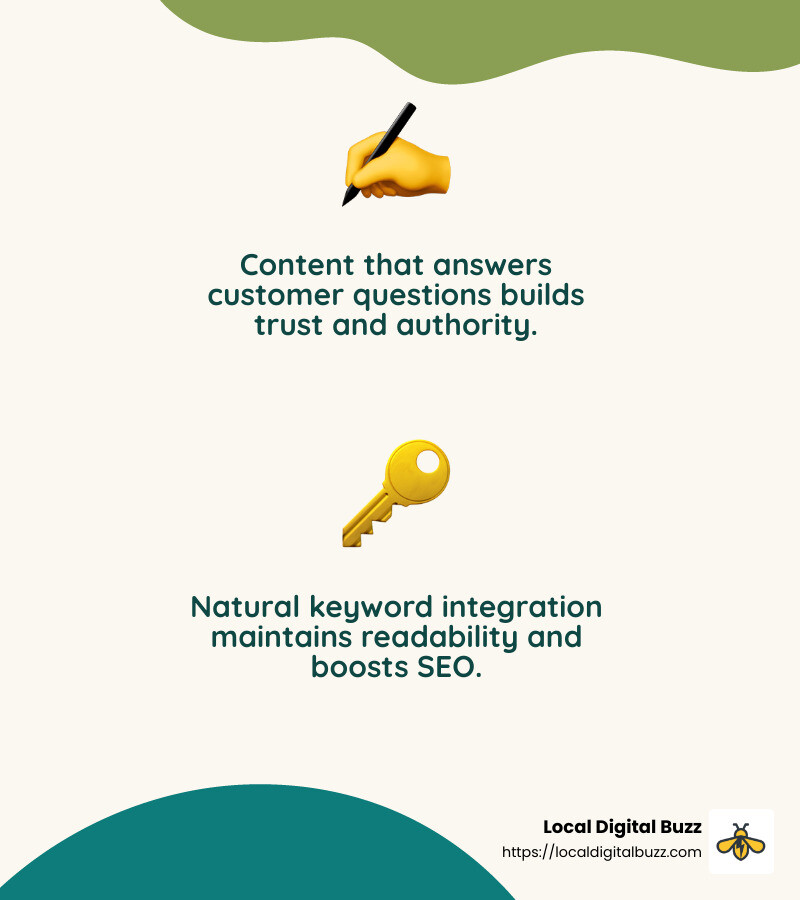
    Visual appeal in content creation - small business SEO infographic 2_facts_emoji_nature

    Internal linking is another crucial aspect of on-page SEO. It involves linking one page of your website to another. This helps search engines understand the structure of your site and keeps visitors engaged longer.

    • Link to relevant pages: Ensure that your links are relevant and add value. For example, if you mention “hair dyeing” on your homepage, link to a detailed page about your hair dyeing services.
    • Use descriptive anchor text: The clickable text of your link should be descriptive and relevant to the target page. Instead of “click here,” use “learn more about hair dyeing.”
    • Create a logical structure: Organize your website so that related content is connected through internal links. This improves navigation and helps users find the information they need.

    User Experience

    User experience (UX) is all about making your website easy and enjoyable to use. A positive UX can lead to higher engagement and better search rankings.

    • Mobile optimization: Ensure your website is responsive and looks good on all devices. With 64% of searches done on mobile, a mobile-friendly site is crucial.
    • Fast loading times: Slow websites frustrate users and can lead to higher bounce rates. Optimize images and reduce unnecessary scripts to improve loading times.
    • Clear navigation: Make sure your site is easy to steer. Use clear labels and a simple menu structure so visitors can find what they’re looking for quickly.

    By focusing on these on-page SEO strategies, you can improve your website’s visibility and provide a better experience for your users. Next, we’ll explore how to leverage local SEO to attract nearby customers.

    Leverage Local SEO

    Local SEO is a powerful tool for attracting customers in your area. By focusing on local search, you can ensure your business pops up when people nearby are searching for products or services like yours. Let’s explore how to make the most of local SEO.

    Google Business Profile

    Setting up a Google Business Profile is one of the simplest ways to improve your local SEO. It’s like a digital business card that appears right in search results and on Google Maps.

    • Claim and verify your profile: Make sure your business is listed and that you’ve claimed it. This allows you to manage the information Google displays about your business.
    • Keep information accurate: Ensure your name, address, and phone number (NAP) are consistent and accurate. This builds trust with both customers and search engines.
    • Encourage reviews: Ask happy customers to leave positive reviews. This not only boosts your reputation but also signals to Google that your business is trustworthy.

    Local Intent

    Understanding and targeting local intent is key to capturing nearby customers. Local intent refers to searches where the user is looking for something specific to their location.

    • Use location-based keywords: Incorporate location-specific terms into your content. For instance, a bakery in Austin might use “best cupcakes in Austin” as a keyword.
    • Create local content: Write blog posts or create pages that focus on local events, news, or community activities. This shows you’re engaged with your community and helps you rank for local searches.
    • Add location pages: If you have multiple locations, create a dedicated page for each one. Include details like address, contact info, and directions to help customers find you easily.

    By focusing on local SEO, you can make your business more visible to people in your area. This can lead to increased foot traffic and sales. Next, let’s dive into how to build quality backlinks to further improve your search rankings.

    Building quality backlinks is crucial for improving your website’s authority and search engine rankings. Backlinks are like votes of confidence from other websites, telling search engines that your site is a reliable source of information. Here’s how to create a solid backlink strategy:

    A well-thought-out backlink strategy can significantly boost your site’s visibility.

    • Identify reputable sources: Aim to get links from well-known and trusted websites. This can include industry blogs, news sites, or educational institutions.
    • Create shareable content: High-quality, informative content is more likely to be shared and linked to by other sites. Consider writing guides, infographics, or case studies that provide real value to your audience.
    • Engage with industry communities: Join forums or social media groups related to your industry. Share your expertise and link to your content when relevant.

    Reputable Sources

    Securing backlinks from reputable sources improves your site’s credibility.

    • Submit to directories: Ensure your business is listed in reputable directories such as Google Business Profile, Bing Places, and Yelp for Business. These platforms not only provide backlinks but also increase your visibility.
    • Network with local businesses: Collaborate with other local companies to exchange links. This can be mutually beneficial, especially if you operate in complementary industries.
    • Guest blogging: Write guest posts for popular blogs in your niche. This not only builds backlinks but also positions you as an authority in your field.

    Effective link building requires patience and persistence.

    • Monitor your backlinks: Use tools like Google Search Console to keep track of who is linking to your site. This helps ensure your backlinks are from quality sources.
    • Reach out for links: Don’t hesitate to contact websites that you believe would benefit from linking to your content. A polite email explaining the value of your content can go a long way.
    • Fix broken links: Identify broken links on your site and fix them promptly. Broken links can harm your SEO and user experience.

    By focusing on building quality backlinks, you’ll improve your website’s authority and improve your search rankings. Next, we’ll tackle some frequently asked questions about small business SEO to clear up any lingering doubts.

    Frequently Asked Questions about Small Business SEO

    Does SEO really work for small businesses?

    Absolutely! SEO is a powerful tool for small businesses looking to grow. According to recent data, 53.3% of all website traffic comes from organic searches. This means that when done right, SEO can drive significant traffic to your site without the need for costly ads.

    By optimizing your website for search engines, you improve your chances of being found by potential customers. Plus, SEO is not just about ranking higher; it’s about providing value to your audience. High-quality, informative content can establish your business as an authority in your industry, attracting more visitors over time.

    How much does SEO cost for a small business?

    The cost of SEO services can vary widely depending on the scope of work and the agency or consultant you choose. On average, small businesses might spend anywhere from a few hundred to several thousand dollars per month on SEO.

    Budget considerations are crucial. It’s important to find a balance between affordability and quality. Some agencies offer flat-rate packages, while others might charge hourly rates. It’s essential to discuss your goals and budget with potential SEO providers to find a plan that fits your needs. SEO is an investment that, when done correctly, can yield substantial returns in the form of increased traffic and sales.

    What is the difference between small business SEO and local SEO?

    While both are essential, small business SEO and local SEO focus on different aspects. Small business SEO aims to improve your website’s visibility on a broader scale, targeting a wider audience. It involves optimizing your site for relevant keywords, creating quality content, and building backlinks to boost overall search engine rankings.

    On the other hand, local SEO is about enhancing your online presence within a specific geographic area. It’s crucial for businesses with a physical location or those serving a particular region. Local SEO strategies include optimizing your Google Business Profile, gathering online reviews, and ensuring your business information is consistent across online directories. In 2023, 76% of people who searched for something nearby visited a business within a day, highlighting the importance of local SEO for driving foot traffic and local engagement.

    Understanding these differences helps tailor your strategy to meet your business goals effectively.

    Conclusion

    At Local Digital Buzz, we understand the unique challenges that small businesses face in the digital landscape. Our customized strategies are designed to help your business grow by enhancing your online presence and optimizing your website for search engines. We combine cutting-edge technology with a human touch to deliver results that matter.

    Why choose us? Our all-in-one approach means you get comprehensive digital marketing, social media, and lead-generation services without long-term contracts. We focus on creating custom solutions that align with your business goals and budget. Whether it’s improving site speed, conducting keyword research, or building quality backlinks, our strategies are crafted to drive traffic and boost your search engine rankings.

    Small business SEO is not a one-time task but a continuous process. It requires effort and patience, but the rewards are worth it. By investing in SEO, you’re investing in the future of your business. With our expertise, you can confidently steer the digital world and achieve sustainable growth.

    Let us help you make your small business more visible and successful. Partner with Local Digital Buzz and see your business thrive!

     

  • Lead Generation Unlocked: How to Get Started

    Lead Generation Unlocked: How to Get Started

    When it comes to fostering business success, the importance of a generate leads service cannot be overstated. For any B2B company looking to expand its reach and improve revenue, leads are the lifeblood. To instantly kick-start your lead generation journey, consider these vital elements:

    • Understand your target audience’s needs and preferences.
    • Use multiple channels to engage potential clients, such as social media, email campaigns, and networking events.
    • Continuously nurture relationships with valuable content to convert leads into loyal customers.

    Lead generation stands at the core of B2B growth. It helps businesses find and connect with new potential clients. With the right strategies, companies can ensure a steady influx of prequalified prospects. Therefore, using the power of an effective lead generation service is crucial for staying competitive in today’s market landscape.

    I’m Joshua Fleming, a digital marketing expert with decades of experience in crafting successful lead generation strategies. I empower businesses, from small startups to high-profile clients, helping them grow by mastering the art of generating quality leads.

    Lead Generation Process Infographic: illustrates the steps of identifying target audience, selecting communication channels like social media and email, creating engaging content, nurturing leads with consistent follow-ups, and converting leads to customers. Each step includes examples of specific actions like customer surveys, newsletters, and product demos, along with potential challenges and solutions for each stage. - generate leads service infographic infographic-line-5-steps-neat_beige

    Understanding Lead Generation

    Lead generation is the process of attracting and engaging potential customers to the point where they express interest in your products or services. It’s about creating connections and guiding them through the buying journey. In B2B, lead generation is crucial for growth and establishing long-lasting relationships.

    A lead is anyone who shows interest in what you offer, but they might not be ready to buy yet. This interest is typically shown by exchanging information, like providing a name and email address for a piece of content.

    Types of Leads

    Understanding the different types of leads is essential. There are four main categories, each representing a different level of interest:

    • Marketing Qualified Lead (MQL): These are leads who have engaged with your marketing efforts, such as downloading a whitepaper or attending a webinar. They show interest but aren’t ready for a sales call yet.
    • Sales Qualified Lead (SQL): These leads have been vetted by the sales team and are considered ready for direct sales engagement. They show a strong intent to purchase and often match the ideal customer profile.
    • Product Qualified Lead (PQL): These individuals have used your product, usually through a free trial or freemium model. They indicate readiness to become paying customers through their usage patterns.
    • Service Qualified Lead: These leads express interest in your service offerings, often through initial consultations or requests for more information.

    Types of Leads - generate leads service infographic 4_facts_emoji_blue

    The Lead Generation Process

    Lead generation is about attracting your target audience and engaging them until they want to share their information with you. This process involves driving targeted traffic to your website, capturing visitor information, and nurturing those who fit your buyer personas.

    There are two main types of lead generation:

    1. Inbound Lead Generation: This strategy attracts potential customers by offering valuable content custom to their needs. It uses tools like blogs, social media, SEO, and content marketing to draw visitors in and build trust.
    2. Outbound Lead Generation: This traditional method involves reaching out to potential customers through cold calls, emails, and direct mail. It requires a more proactive approach to engage prospects.

    Understanding these elements is the first step in building meaningful relationships with potential customers. By focusing on the right type of lead and tailoring your approach, you can effectively convert interest into action, driving growth and success for your business.

    Generate Leads Service: Key Strategies

    Generating leads is the heartbeat of any successful business. But how do you do it effectively and consistently? Let’s explore some key strategies to open up the potential of your generate leads service.

    1. Referrals

    Referrals are like gold in lead generation. Happy customers are your best marketers. Encourage them to spread the word about your services. A simple referral request at the end of a successful transaction can open doors to new opportunities. Word of mouth is powerful. It builds trust faster than any ad campaign ever could.

    2. Customer Care

    Don’t just sell and forget. Stay connected with your customers. Regular follow-up calls not only make customers feel valued but also keep your business top of mind. These interactions are a great chance to gather feedback and ask for referrals. As Donna Fluss noted, engaging customers across channels boosts loyalty and satisfaction.

    3. Lead Nurturing

    Not every lead is ready to buy immediately, and that’s okay. Nurture these leads with care. Keep in touch by sending them relevant information custom to their interests. Automated emails and reminders can help maintain this connection. When they’re ready to make a decision, you’ll be the first they think of.

    4. Trusted Information

    Become a trusted source of information in your field. Share your expertise through blogs, webinars, and speaking engagements. This not only positions you as an authority but also attracts leads who are genuinely interested in your services. When people see you as an expert, they’re more likely to trust you with their business needs.

    5. Online Presence

    Having a strong online presence is non-negotiable. Use the internet to showcase your expertise and connect with potential leads. Engage with your audience on social media, participate in online forums, and optimize your website for search engines. A robust online presence expands your reach and draws in quality leads.

    By integrating these strategies into your generate leads service, you’ll create a steady stream of potential customers eager to engage with your business. Stay tuned for more insights on lead generation techniques in the next section!

    Top 10 Lead Generation Techniques

    Generating leads isn’t just about casting a wide net; it’s about using the right techniques to attract and convert potential customers. Here are ten proven methods to improve your generate leads service.

    1. Referrals

    Referrals are a cornerstone of effective lead generation. When your current customers are satisfied, they’re likely to refer friends and colleagues. Encourage this by implementing a referral program. A recommendation from a trusted source is incredibly powerful.

    2. Customer Care Calls

    After a sale, don’t just move on. Regular customer care calls help maintain relationships and can lead to additional sales or referrals. These calls show that you value your customers beyond the initial transaction. According to CRM expert Donna Fluss, engaging customers across multiple channels significantly boosts loyalty and satisfaction.

    3. Lead Nurturing

    Some leads need time to consider their options. Nurturing these leads involves providing them with relevant content and staying in touch until they’re ready to buy. Use automated systems to send personalized emails and reminders, ensuring you’re the first choice when they’re ready to decide.

    4. Trusted Source

    Position yourself as a trusted source of information. Share valuable insights and expertise through blogs, webinars, or public speaking. This builds credibility and attracts leads interested in your knowledge. When you’re seen as an expert, potential clients are more likely to trust you with their needs.

    5. Online Networking

    Online networking is crucial. Platforms like LinkedIn offer opportunities to connect with industry peers and potential leads. Engage in discussions, share relevant content, and build relationships online. This not only expands your network but also increases visibility.

    6. Social Engagement

    Being active on social media is a great way to connect with potential leads. Engage with your audience by responding to comments, sharing valuable content, and participating in conversations. Social platforms provide a space to build relationships and showcase your brand’s personality.

    7. Traditional Networking

    While digital methods are essential, traditional networking shouldn’t be overlooked. Attend industry events, trade shows, and local meet-ups. Face-to-face interactions can create strong connections and open doors to new opportunities.

    8. Creativity

    Stand out from the competition by being creative in your lead generation approach. Whether it’s through unique marketing campaigns or innovative content, creativity captures attention and leaves a lasting impression.

    9. Perseverance

    Lead generation is not a one-time effort. Perseverance is key. Consistently apply these techniques and be patient. Building a strong pipeline takes time, but the results are worth it.

    10. Internet Expertise

    Leverage the internet to highlight your expertise. Optimize your website for search engines, participate in online forums, and share content that showcases your knowledge. A strong online presence attracts quality leads and positions you as a leader in your field.

    Integrating these techniques into your generate leads service will create a robust strategy that consistently attracts and converts potential customers. Stay tuned for more insights on the tools and technologies that can further improve your lead generation efforts!

    Tools and Technologies for Lead Generation

    In today’s digital landscape, leveraging the right tools and technologies is crucial for an effective generate leads service. Let’s explore some of the key technologies that can boost your lead generation efforts.

    AI-Optimized Strategies

    Artificial Intelligence (AI) is changing lead generation by offering data-driven insights and automation capabilities. AI tools can analyze vast amounts of data to identify patterns and predict which leads are most likely to convert. This allows businesses to focus their efforts on high-potential prospects, optimizing resource allocation and improving conversion rates. According to industry experts, AI-driven lead scoring can increase conversion rates by up to 50%.

    CRM Integration

    Customer Relationship Management (CRM) systems are essential for managing and nurturing leads. By integrating your lead generation tools with a CRM, you can streamline the entire lead management process. This integration ensures that all lead information is stored in one place, making it easy for sales teams to track interactions and follow up effectively. Popular CRM platforms like HubSpot and Salesforce offer seamless integration options, enhancing your ability to manage leads efficiently.

    Marketing Automation

    Marketing automation tools are a game-changer for lead nurturing. They enable businesses to automate repetitive tasks such as sending emails, scheduling social media posts, and tracking website interactions. By automating these processes, you can maintain consistent engagement with leads without manual intervention. This not only saves time but also ensures that leads receive timely and relevant content, keeping your brand top-of-mind.

    Visitor Intelligence

    Understanding who visits your website is crucial for generating quality leads. Visitor intelligence tools provide insights into the behavior and characteristics of your website visitors. These tools can identify companies, track visitor interactions, and even provide contact details for key decision-makers. By leveraging visitor intelligence, you can tailor your outreach and engagement strategies to better meet the needs of your audience.

    Integrating these tools and technologies into your lead generation strategy can significantly improve your ability to attract, manage, and convert leads. Accept these innovations to stay ahead in the competitive landscape and drive business growth. Stay tuned for the next section, where we’ll address frequently asked questions about lead generation!

    Frequently Asked Questions about Lead Generation

    How do you generate leads for a service?

    Generating leads for a service involves several strategic approaches. Direct engagement is a key method, where you actively reach out to potential clients through personalized communication. This could be through LinkedIn, which is an excellent platform for B2B connections. Crafting personalized messages and engaging with prospects’ content can open doors to meaningful conversations.

    Retargeting is another powerful tactic. It involves showing ads to people who have previously interacted with your website or social media. This keeps your service top-of-mind and encourages them to take the next step.

    Referrals are gold. Encourage satisfied customers to refer others by offering incentives or simply asking for introductions. Word of mouth is incredibly effective and builds trust faster than most other methods.

    Guest blogs can also be a fantastic way to generate leads. By writing articles for reputable sites in your industry, you can showcase your expertise and attract interested readers back to your service.

    What are lead generation services?

    Lead generation services are specialized offerings that help businesses attract and capture consumer interest in their products or services. They often involve collecting contact information through various means, such as web forms, to build a database of potential clients. These services can include strategies like content marketing, SEO, and paid advertising to drive traffic and convert visitors into leads.

    What is the fastest way to generate leads?

    When speed is of the essence, a few quick strategies can help you generate leads rapidly. Referrals, as mentioned earlier, can be one of the quickest ways to gain new leads. People are more likely to trust recommendations from friends or colleagues, which shortens the decision-making process.

    Another fast approach is leveraging your online presence through social media and email campaigns. Running targeted ad campaigns on platforms like Google Ads or Facebook can quickly attract interested prospects. Additionally, using web forms on your landing pages to capture visitor information can expedite the lead collection process.

    In summary, combining direct engagement, leveraging platforms like LinkedIn, and utilizing quick strategies such as referrals and retargeting can significantly boost your lead generation efforts. Stay tuned for more insights and strategies in the upcoming sections!

    Conclusion

    At Local Digital Buzz, we pride ourselves on our comprehensive strategies for lead generation. Our approach is not just about collecting leads; it’s about creating meaningful connections that drive business growth. We understand that every business is unique, so we offer custom solutions custom to your specific needs.

    Our technology-driven methods set us apart. We integrate cutting-edge tools and techniques to optimize your lead generation efforts. This includes leveraging AI for smarter targeting and using CRM systems to manage and nurture leads effectively. Our focus is on delivering high-quality leads that convert, ensuring a strong return on investment for your business.

    Our all-in-one approach means you get everything you need under one roof. From digital marketing to social media management, we cover it all. This not only simplifies the process for you but also ensures consistency and coherence in your lead generation strategy.

    Ready to open up the full potential of your business with our generate leads service? Contact Local Digital Buzz today and find how our expertise can transform your lead generation efforts into tangible results.

  • From Plan to Profit: Building a Lead Generation Strategy That Works

    From Plan to Profit: Building a Lead Generation Strategy That Works


    Lead generation marketing plan is the backbone of any thriving business eager to connect with potential customers. At its core, this plan is about creating a step-by-step roadmap that turns strangers into leads and, eventually, into loyal customers. Whether you’re aiming to improve your sales pipeline, grow your email list, or identify high-quality prospects for personalized engagement, an effective plan can make all the difference.

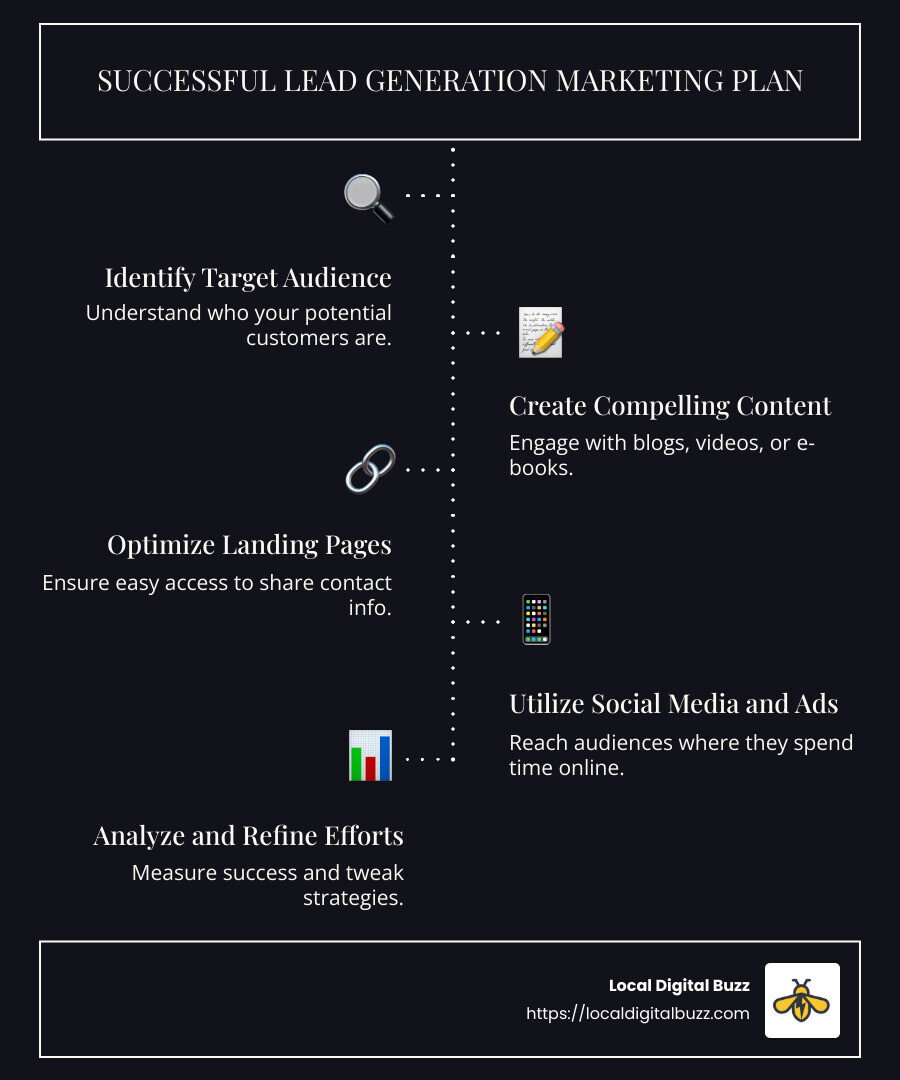
    Here’s a quick view of what a successful lead generation marketing plan includes:

    • Identifying target audience: Know who your potential customers are.
    • Creating compelling content: Use blogs, videos, or e-books to engage.
    • Optimizing landing pages and forms: Make it easy for users to share contact info.
    • Utilizing social media and ads: Reach your audience where they spend time online.
    • Analyzing and refining efforts: Always measure success and tweak strategies.

    As Joshua Fleming, a digital marketing veteran and CEO of Local Digital Buzz, I bring years of expertise to help businesses craft a robust lead generation marketing plan. My experience spans from turning military communication skills into marketing tactics, to driving results for both local businesses and celebrity clients. Let’s explore how a solid foundation in lead generation can transform your business trajectory.

    Steps in Lead Generation Marketing Plan Infographic - lead generation marketing plan infographic infographic-line-5-steps-dark

    Understanding Lead Generation Marketing Plan

    A lead generation marketing plan is essential for businesses that want to connect with potential customers and turn them into loyal clients. It’s like a detailed map guiding you from the start of the customer journey to the final destination: conversion. This plan is all about understanding your audience, crafting engaging content, and refining your strategies based on data.

    Customer Research: The Foundation

    Before you even think about generating leads, you need to know who you’re targeting. Customer research is the first step. This involves analyzing your current customer base to understand their demographics, behaviors, and preferences. Look for patterns among your most loyal and profitable customers. What do they have in common? This information is crucial for creating buyer personas—detailed profiles of your ideal customers.

    A great example of this is American Express. They publish articles, videos, and podcasts aimed at finance professionals. By understanding their audience, they create content that resonates, encouraging these professionals to subscribe to their newsletter and eventually become customers.

    Meeting Audience Needs

    Once you know your audience, the next step is to address their needs. This means creating content that solves a problem or fulfills a desire. Whether it’s through informative blog posts, engaging videos, or insightful ebooks, your content should be valuable and relevant.

    For instance, lead magnets—gated content like templates or white papers—are a powerful tool. These require users to provide their contact information in exchange for access. Slack, for example, uses reports as lead magnets. Users fill out a form to download the report, providing valuable lead information.

    Crafting the Plan

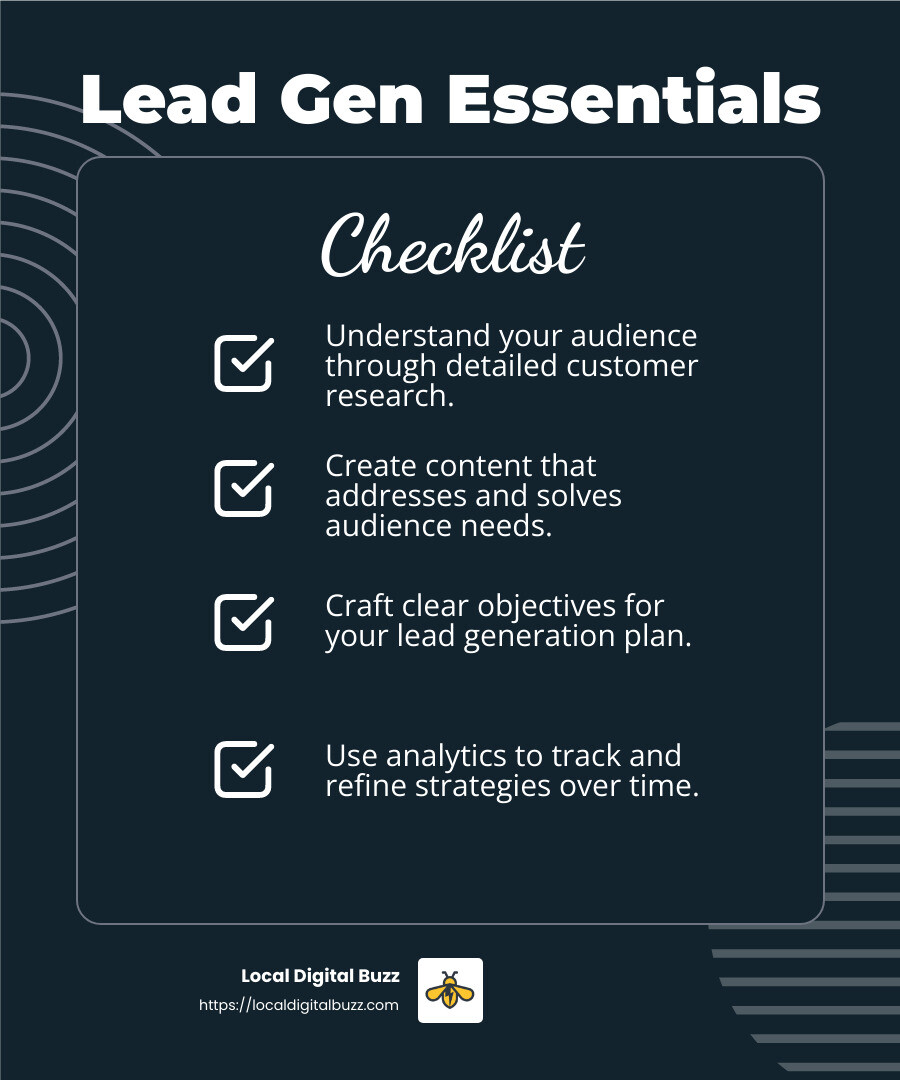
    With a clear understanding of your audience and their needs, you can craft a lead generation marketing plan that works. This plan should include:

    • Clear objectives: Define what success looks like for your lead generation efforts. Is it more subscribers? Higher conversion rates?
    • Engaging content: Use a mix of content types to keep your audience interested. This could be blogs, videos, or even live chats.
    • Optimized landing pages: Make sure your pages are designed to convert visitors into leads. This includes clear CTAs and easy-to-use forms.
    • Data analysis: Use analytics tools to track your progress. Monitor website traffic, conversion rates, and engagement metrics. This will help you refine your strategy over time.

    By understanding your audience and meeting their needs, you can create a lead generation marketing plan that not only attracts potential customers but also turns them into loyal clients.

    A successful lead generation strategy starts with understanding your audience and meeting their needs - lead generation marketing plan infographic checklist-dark-blue

    Next, we’ll dive into the key components of a successful lead generation strategy, exploring how content marketing, website optimization, and social media ads play a crucial role.

    Key Components of a Successful Lead Generation Strategy

    Crafting a lead generation marketing plan that truly works involves several key components. Let’s explore the essentials: content marketing, website optimization, email marketing, and social media ads.

    Content Marketing: Attract and Engage

    Content marketing is the backbone of any lead generation strategy. It’s about creating valuable, relevant content that attracts and engages your target audience. Think of your content as the rocks in your marketing jar. These are the big pieces that fill up space and drive engagement.

    • Blog Posts & Articles: Regularly publishing insightful articles helps establish your authority in the industry. For example, American Express uses articles and podcasts to connect with finance professionals.
    • Lead Magnets: Offer valuable resources like ebooks or templates in exchange for contact information. This approach is a great way to capture leads.
    • Video Content: Engaging videos can capture attention quickly and are highly shareable across platforms.

    Website Optimization: Smooth Sailing

    Your website is often the first point of contact with potential leads. It needs to be optimized to guide visitors seamlessly through the sales funnel.

    • Landing Pages: These should be dedicated to specific offers with clear calls-to-action (CTAs). Ensure they are mobile-friendly and easy to steer.
    • Lead Forms: Keep forms simple and straightforward. Collect only the necessary information to encourage more sign-ups.
    • SEO: Optimize your site for search engines to drive organic traffic. Use relevant keywords and ensure your site loads quickly.

    Email Marketing: Nurture Relationships

    Email marketing is a powerful tool for nurturing leads and guiding them through the sales funnel. It’s about building relationships over time.

    • Segmentation: Divide your email list into segments based on demographics or behavior. This allows for more personalized communication.
    • Automated Campaigns: Set up automated email sequences to keep leads engaged. Welcome emails, follow-ups, and newsletters are great examples.
    • Engaging Content: Include valuable content in your emails to keep subscribers interested and encourage them to take action.

    Social Media Ads: Reach and Convert

    Social media platforms are excellent for reaching a broader audience and converting them into leads.

    • Targeted Ads: Use social media ads to target specific demographics. Platforms like Facebook and Instagram offer detailed targeting options.
    • Engaging Content: Create eye-catching ads that encourage clicks. Use images, videos, or carousels to stand out.
    • Retargeting: Implement retargeting campaigns to reach users who have interacted with your brand but haven’t converted yet.

    By focusing on these key components, your lead generation marketing plan can effectively attract, engage, and convert potential customers. Next, we’ll explore the 4 L’s of a lead generation strategy, diving into the details of location, leads, literature, and luxury.

    The 4 L’s of Lead Generation Strategy

    When building a successful lead generation marketing plan, consider the 4 L’s: location, leads, literature, and luxury. These elements help ensure your strategy is well-rounded and effective.

    Location: Be Where Your Audience Is

    The first L, location, is all about understanding where your potential customers are. It’s crucial to focus your efforts where your audience spends their time. For instance, if you’re targeting professionals, LinkedIn might be your platform of choice. On the other hand, if you’re reaching out to younger audiences, consider Instagram or TikTok.

    • Online Presence: Ensure your business is visible on the platforms your audience frequents.
    • Local SEO: If your business is location-based, optimize for local search to attract nearby customers.
    • Events and Conferences: Attend industry events where your target audience gathers to network and generate leads face-to-face.

    Leads: Capture and Qualify

    The second L, leads, is about capturing potential customers’ information and qualifying them effectively. This step is vital to ensure you’re focusing on prospects who are most likely to convert.

    • Lead Capture Forms: Use simple and concise forms to collect essential information.
    • Lead Scoring: Implement a system to score leads based on their interactions with your brand. This helps prioritize the most promising leads.
    • CRM Integration: Use a Customer Relationship Management (CRM) system to track and manage your leads efficiently.

    Literature: Educate and Inform

    Literature refers to the content you create to educate and inform your audience. This is your chance to position your brand as a thought leader and build trust with potential customers.

    • Educational Content: Develop blog posts, whitepapers, and webinars that address common pain points in your industry.
    • Case Studies: Share success stories of how your product or service has helped others. This can be a powerful tool to persuade potential leads.
    • Regular Updates: Keep your content fresh and relevant to maintain engagement and interest.

    Luxury: Offer Value and Exclusivity

    Finally, luxury involves offering something of high value or exclusivity to entice leads. This doesn’t necessarily mean high-end products but rather unique offerings that make your brand stand out.

    • Exclusive Offers: Provide limited-time discounts or early access to new products for leads.
    • VIP Programs: Create a sense of exclusivity with loyalty programs or special memberships.
    • Personalized Experiences: Tailor your interactions and offerings to meet the specific needs of your leads.

    By incorporating the 4 L’s into your lead generation marketing plan, you create a comprehensive strategy that addresses all aspects of attracting and converting potential customers. Next, we’ll dig into effective lead generation techniques, including lead capture, lead magnets, landing pages, and lead scoring.

    Effective Lead Generation Techniques

    To build a strong lead generation marketing plan, employ techniques that effectively capture and nurture potential customers. Let’s explore some of the most impactful methods: lead capture, lead magnets, landing pages, and lead scoring.

    Lead Capture: The First Step

    Capturing leads is the initial step in building your sales funnel. It’s about collecting contact information from potential customers.

    • Lead Capture Forms: Keep forms simple and straightforward. Ask for only the necessary information to reduce friction. As mentioned, a balance between simplicity and data richness is key. Early-stage leads might only need to provide an email, while more engaged prospects might share more details.
    • Live Chat: Implement live chat on your website. It allows visitors to ask questions and share contact details with ease. A conversational approach, like the one used by Kantata, can make visitors more comfortable sharing information.

    Lead Magnets: Offer Value

    Lead magnets are incentives that encourage prospects to share their information. They provide value in exchange for contact details.

    • Types of Lead Magnets: These can include free trials, eBooks, webinars, or exclusive content. For example, offering a free trial of a product or a downloadable white paper can entice potential leads to engage with your brand.
    • Educational Value: Make sure your lead magnets are valuable and relevant to your audience. As the research suggests, content that educates and informs is particularly effective in engaging potential customers.

    Landing Pages: Optimize for Conversion

    Landing pages are dedicated pages designed to convert visitors into leads. They should focus on a single goal and be separate from your main website.

    • Clear Value Proposition: Clearly communicate the benefits of your offer. Use social proof, such as testimonials or ratings, to build trust.
    • Mobile Optimization: Ensure your landing pages are mobile-friendly. A seamless mobile experience can significantly boost your conversion rates.

    Lead Scoring: Prioritize Prospects

    Lead scoring is the process of ranking leads based on their likelihood to convert. This helps prioritize efforts on the most promising prospects.

    • Criteria for Scoring: Use factors such as engagement level, interaction history, and demographic information to score leads. This allows your sales team to focus on leads that are most likely to become customers.
    • Integration with CRM: Integrate lead scoring with your CRM to streamline the process and ensure that your sales team has access to up-to-date information.

    By implementing these effective lead generation techniques, you can improve your strategy and improve your chances of converting prospects into loyal customers. Next, we’ll address common questions about lead generation to further clarify the process.

    Frequently Asked Questions about Lead Generation

    What is a Lead Generation Marketing Plan?

    A lead generation marketing plan is your roadmap for attracting and converting potential customers into leads. Think of it as the blueprint that outlines how you’ll reach out to your audience, capture their interest, and guide them through your sales cycle.

    At its core, this plan focuses on customer acquisition by understanding your audience’s needs and tailoring your strategies to meet them. It involves a mix of customer research, content creation, and strategic outreach to ensure you’re engaging the right people at the right time.

    What are the 4 L’s of a Lead Generation Strategy?

    The 4 L’s—location, leads, literature, and luxury—are key components to consider in your lead generation strategy:

    • Location: Knowing where your potential customers are is crucial. Whether it’s a physical location or an online platform, understanding where your audience spends their time helps you target them effectively.
    • Leads: The goal is to attract and nurture potential customers. This involves collecting information and engaging with them through personalized communication. Lead scoring can help prioritize the most promising prospects.
    • Literature: Content is king in lead generation. Providing valuable literature, such as blog posts, eBooks, or webinars, can engage your audience and position your brand as a trusted source of information.
    • Luxury: This isn’t just about high-end products. It’s about offering a premium experience. Whether through exceptional customer service or exclusive offers, creating a sense of luxury can entice leads to choose your brand over competitors.

    How Do You Plan to Generate Leads?

    Generating leads requires a well-thought-out plan that aligns with your audience’s needs and preferences. Here’s how you can approach it:

    • Customer Research: Start by understanding your target audience. Analyze their demographics, interests, and behaviors to create detailed buyer personas.
    • Inbound Content Strategy: Develop an inbound strategy that focuses on attracting leads through valuable content. This includes optimizing your website, creating engaging blog posts, and using SEO to increase visibility.
    • Audience Needs: Tailor your messaging and offers to address the specific needs and pain points of your audience. This personalized approach helps build trust and encourages leads to engage with your brand.

    By focusing on these aspects, you can create a robust lead generation marketing plan that not only attracts leads but also nurtures them through the sales cycle, ultimately turning them into loyal customers.

    Now, let’s dive deeper into the components of a successful lead generation strategy.

    Conclusion

    In digital marketing, a well-crafted lead generation marketing plan is essential for business growth. At Local Digital Buzz, we understand the importance of tailoring strategies to fit the unique needs of each business. Our approach combines cutting-edge technology with a human touch, ensuring that our clients receive custom solutions designed to drive results.

    Custom Solutions for Every Business

    We pride ourselves on our ability to offer personalized strategies that improve online presence and boost business growth. Whether you’re a small business or a large enterprise, our team is dedicated to crafting a plan that aligns with your goals and helps you reach your target audience effectively. By focusing on your specific needs, we ensure that every aspect of your lead generation strategy is optimized for success.

    Driving Business Growth

    Our comprehensive services are designed to not only attract leads but also convert them into loyal customers. By leveraging techniques like content marketing, social media engagement, and email campaigns, we help businesses build strong relationships with their audience. This approach not only increases brand visibility but also fosters long-term growth.

    In today’s competitive market, having a partner like Local Digital Buzz can make all the difference. Our commitment to providing custom solutions without long-term contracts means you have the flexibility to adapt and grow as your business evolves.

    Ready to take your business to the next level? Find how our lead generation services can help you achieve your goals.

    With Local Digital Buzz by your side, you can confidently steer the digital landscape and open up your business’s full potential.