Skip to content
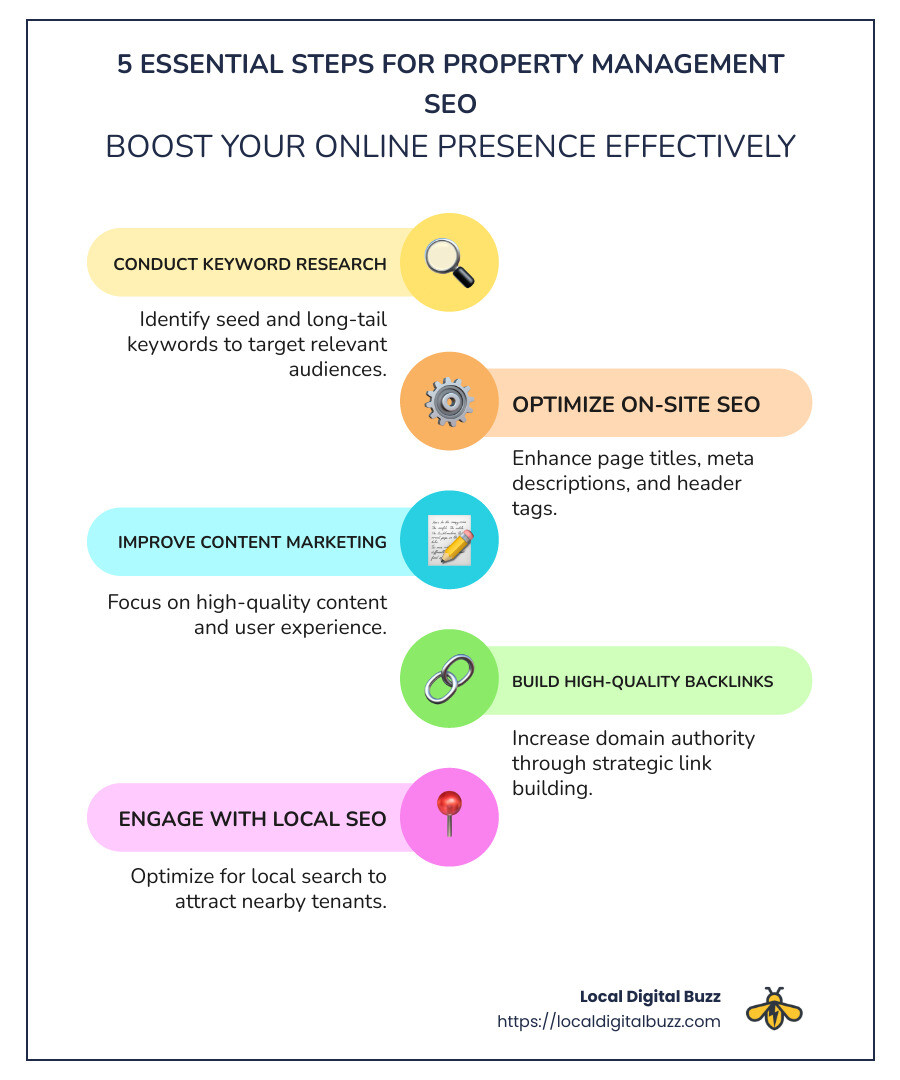
Property management search engine optimization is crucial for businesses looking to grow their online presence and attract more tenants. In today’s digital world, especially in the property management industry, SEO is no longer a nice-to-have but an essential strategy for success. By optimizing online content, property managers can ensure they rank higher in search results, making it easier for potential clients to find their services. Here are some quick tips:
- Research and integrate relevant keywords into your website content.
- Optimize website elements like page titles and meta descriptions.
- Focus on building high-quality backlinks to boost credibility.
- Ensure your site is mobile-friendly and loads quickly.
- Engage with local SEO practices to reach nearby tenants.
For those in search of a practical guide, the rest of this article will provide a comprehensive, step-by-step approach to property management SEO.
I’m Joshua Fleming, a seasoned expert with years of experience in property management search engine optimization and digital marketing. As a former United States Marine, I bring a disciplined and strategic approach to helping businesses thrive online. Let’s dive deeper into how these strategies can transform your property management success.
Understanding Property Management Search Engine Optimization
Search Engine Optimization (SEO) is the practice of enhancing your website to improve its visibility in search engines like Google. For property management companies, this means making sure your website appears when potential tenants search for services you offer.
Organic Search
Organic search refers to the unpaid listings that appear on a search engine results page (SERP). These are the results that Google deems most relevant to the user’s query. According to Moz, a whopping 75% of clicks go to the top three organic results. This makes it vital for property management companies to aim for these top spots.
Keyword Strategy
A solid keyword strategy is the backbone of effective property management search engine optimization. It involves identifying and using the right mix of keywords to attract the right audience. There are two primary types of keywords to focus on:
- Seed Keywords: These are broad terms that relate to your business, like “property management services.” They are the foundation of your SEO strategy.
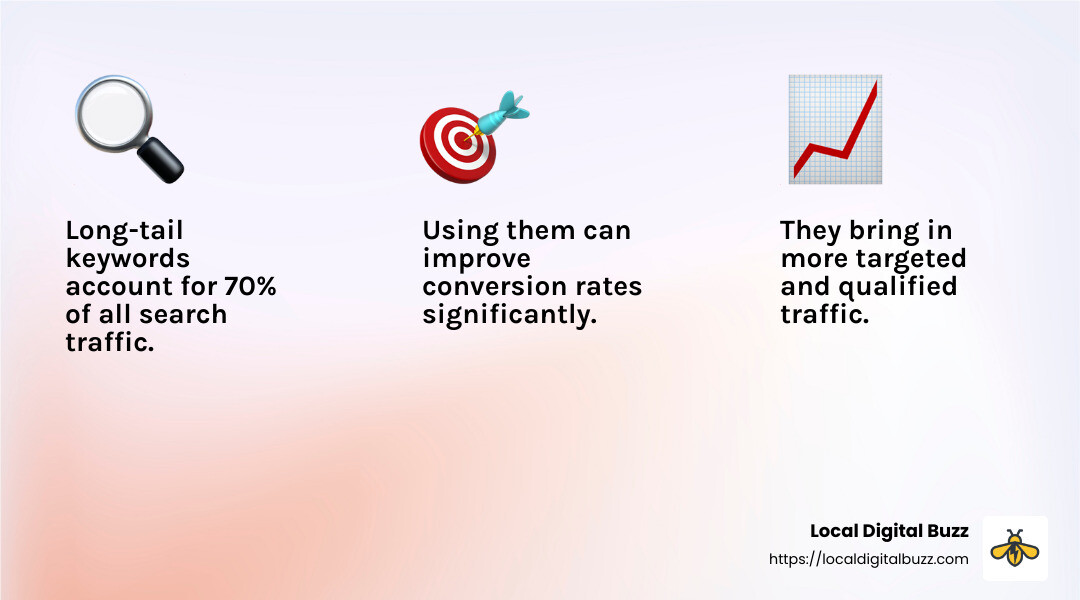
- Long-Tail Keywords: These are more specific phrases, such as “affordable property management in Los Angeles.” While they may have lower search volumes, they often attract more targeted traffic. In fact, Moz notes that long-tail keywords account for 70% of search traffic.
By combining seed and long-tail keywords, you can create a balanced approach that drives qualified leads to your website. It’s not just about getting traffic; it’s about getting the right traffic.
In the next section, we’ll explore how to conduct thorough keyword research to identify the most effective terms for your property management business.
Step 1: Conduct Thorough Keyword Research
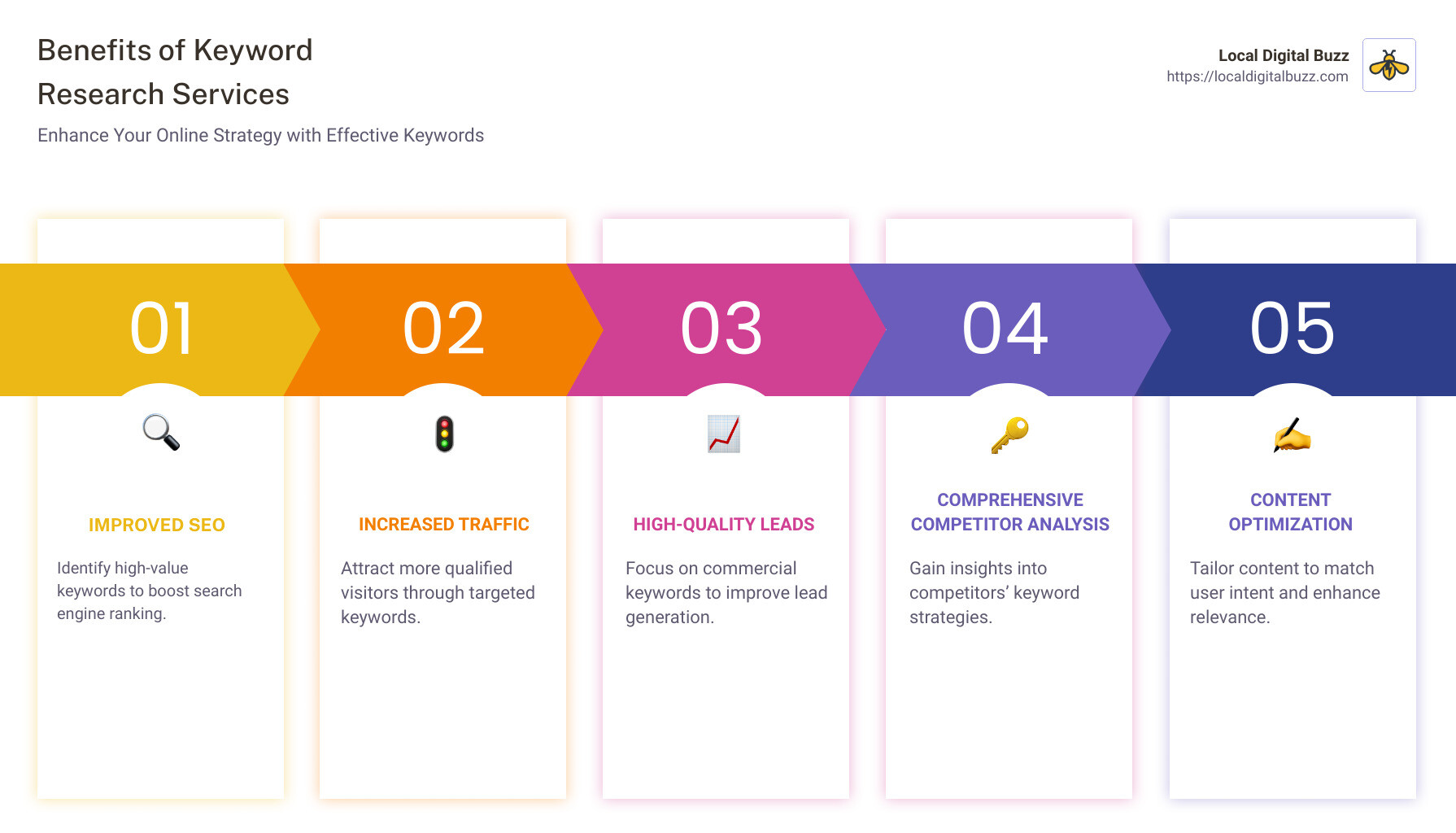
Keyword research is the cornerstone of a successful property management search engine optimization strategy. It involves finding what terms your potential clients are using to find services like yours. With a well-defined keyword strategy, you can attract the right traffic to your website.
Seed Keywords
Start with seed keywords. These are the broad terms that define your business. For property management, examples might include “property management company,” “tenant services,” or “rental management.” These keywords form the foundation of your SEO efforts.
- Create a list: Think about all the services you offer and the locations you serve. Use these as your initial seed keywords.
- Use tools: Tools like Google Keyword Planner can help you identify related terms and gauge their search volume. This will give you a sense of how often these keywords are searched and how competitive they are.
Long-Tail Keywords
Long-tail keywords are longer, more specific phrases. They might not have the high search volumes of seed keywords, but they can bring in more targeted traffic. For example, “best property management company in San Francisco” is a long-tail keyword.
- Focus on specifics: Think about the unique aspects of your business, such as your location or specialized services. These can be turned into long-tail keywords.
- Less competition: Long-tail keywords often have less competition, making it easier to rank higher in search results. This means you can capture a niche audience more effectively.
Balancing Seed and Long-Tail Keywords
A well-rounded keyword strategy uses both seed and long-tail keywords. This balance helps you reach a broad audience while also targeting specific needs and queries.
- Monitor and adjust: Regularly check your keyword performance using tools like SEMrush or Ahrefs. This will help you see which keywords are driving traffic and which ones need tweaking.
- Stay relevant: As trends change, so should your keywords. Keep an eye on industry shifts and update your keyword list accordingly.
By conducting thorough keyword research, you lay the groundwork for successful property management search engine optimization. The right keywords will not only boost your visibility but also attract the clients who need your services most.
Next, we’ll dive into optimizing on-site SEO elements to ensure your website is ready for all that new traffic.
Step 2: Optimize On-Site SEO Elements
When it comes to property management search engine optimization, optimizing your on-site elements is crucial. These elements help search engines understand your content and improve your visibility in search results. Let’s break down the key components: page titles, meta descriptions, URL structure, and header tags.
Page Titles
Page titles are like the headlines of your web pages. They tell both search engines and users what your page is about.
- Unique and Descriptive: Every page should have a unique title that accurately describes its content. Include a relevant keyword to improve search engine rankings.
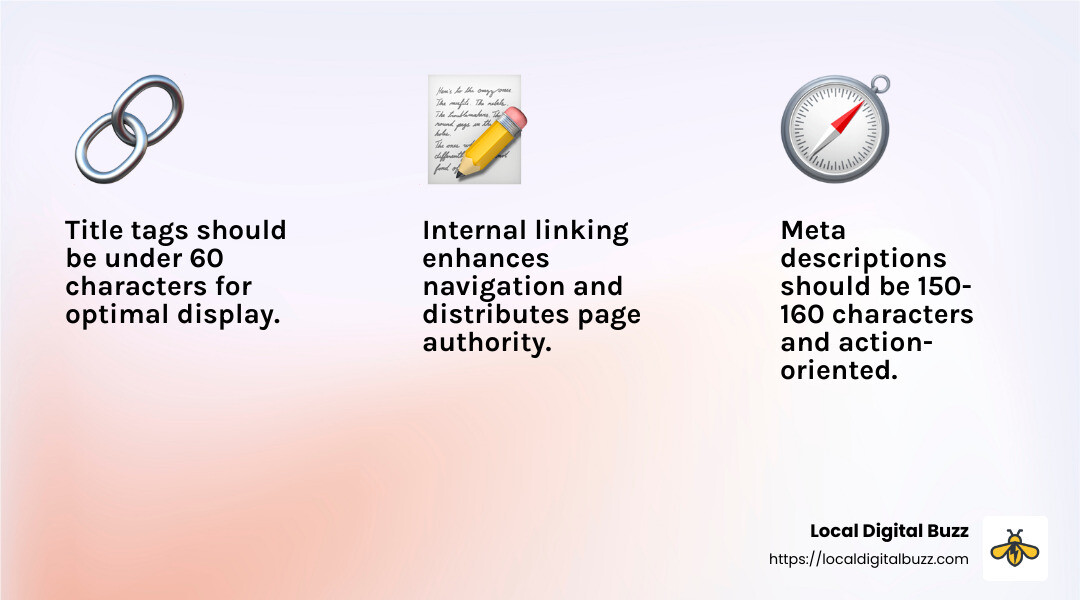
- Length Matters: Keep your titles between 50-60 characters to ensure they’re not cut off in search results.
- Branding: Use your company name in the title to build brand recognition. For example, “Quality Property Management Services – Local Digital Buzz”.
Meta Descriptions
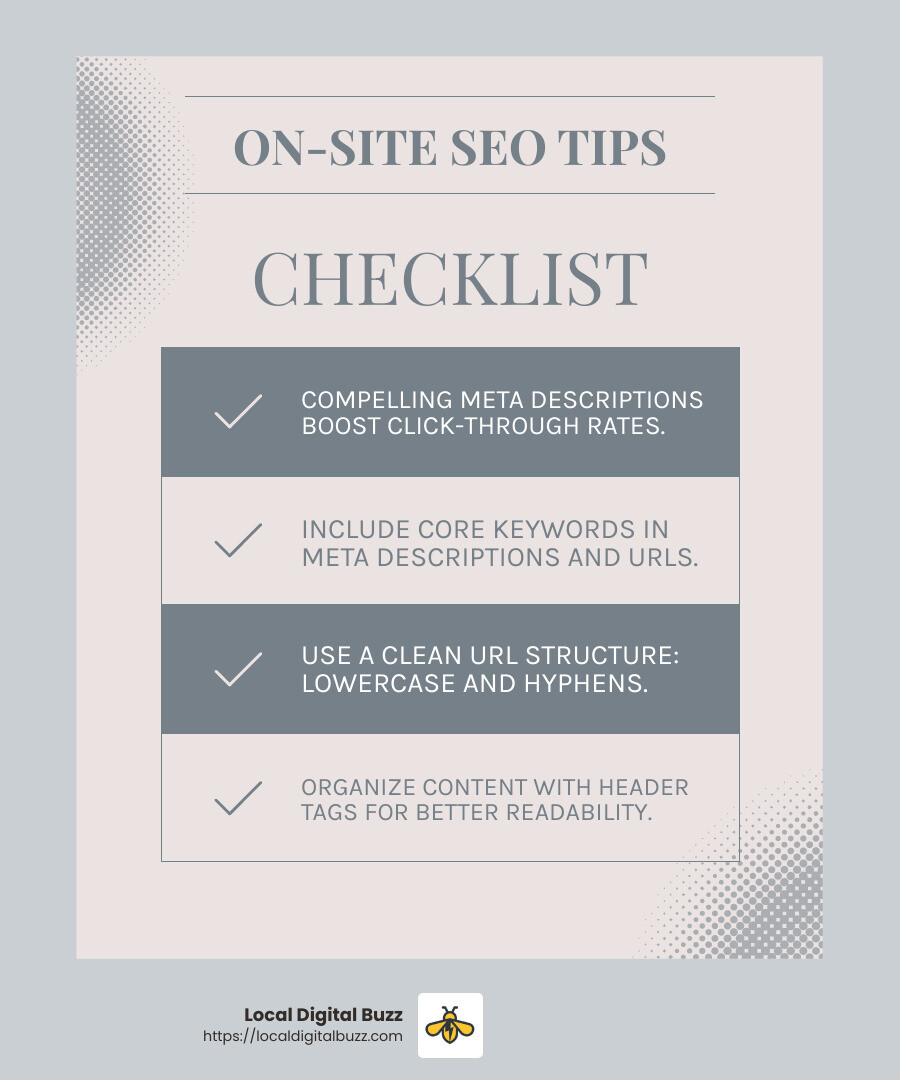
Meta descriptions provide a brief summary of your page content. While they don’t directly impact rankings, they can influence click-through rates.
- Compelling and Relevant: Write a meta description that entices users to click. Highlight the benefits of your services and include a call-to-action.
- Keyword Usage: Use your core keyword once to align with user search intent.
- Optimal Length: Aim for 150-300 characters to prevent truncation in search results.
URL Structure
A clean and simple URL structure helps search engines and users steer your site more efficiently.
- Keyword Inclusion: Include one relevant keyword in your URL to improve SEO.
- Readability: Use hyphens to separate words, avoiding symbols and numbers.
- Consistency: Keep URLs lowercase and ensure they’re under 50 characters.
- Secure Protocol: Use “https://” to signal a secure and trustworthy site.
Header Tags
Header tags (H1, H2, H3, etc.) organize your content and make it easier to read.
- Hierarchy: Use headers to structure your content logically. Start with H1 for the main title, followed by H2 for subheadings.
- Keyword Placement: Incorporate keywords naturally into headers to signal content relevance to search engines.
- Reader-Friendly: Make your content skimmable with clear, concise headers that guide the reader through your page.
By optimizing these on-site SEO elements, you set the stage for better visibility and user engagement. This ensures that when potential clients search for property management services, they find your website first.
Next, we’ll explore how to improve content marketing strategies to further boost your online presence.
Step 3: Improve Content Marketing Strategies
When it comes to property management search engine optimization, content marketing is a powerful tool. It helps you connect with your audience, improve user experience, and boost local SEO. Let’s explore some key strategies.
Content Quality
Content is king, and high-quality content is non-negotiable. It should be relevant, engaging, and informative.
- Relevance: Write about topics your audience cares about. For example, tips for first-time renters or the benefits of professional property management.
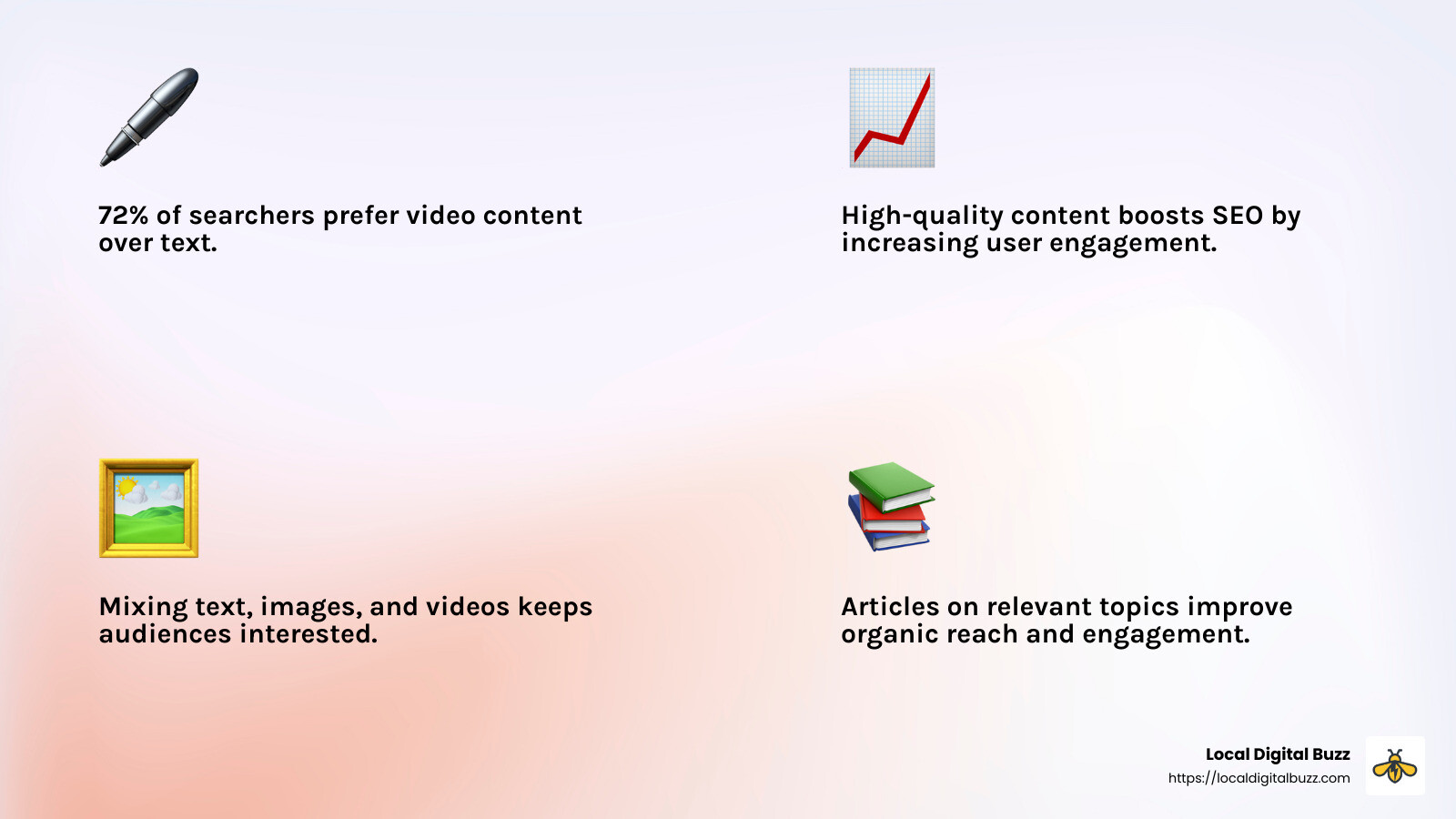
- Engagement: Use a mix of text, images, and videos to keep your audience interested. 72% of searchers prefer video content over text.
- Clarity: Keep your language simple and your sentences short. This makes it easier for readers to understand and enjoy your content.
User Experience
A good user experience keeps visitors on your site longer, which can boost your search rankings.
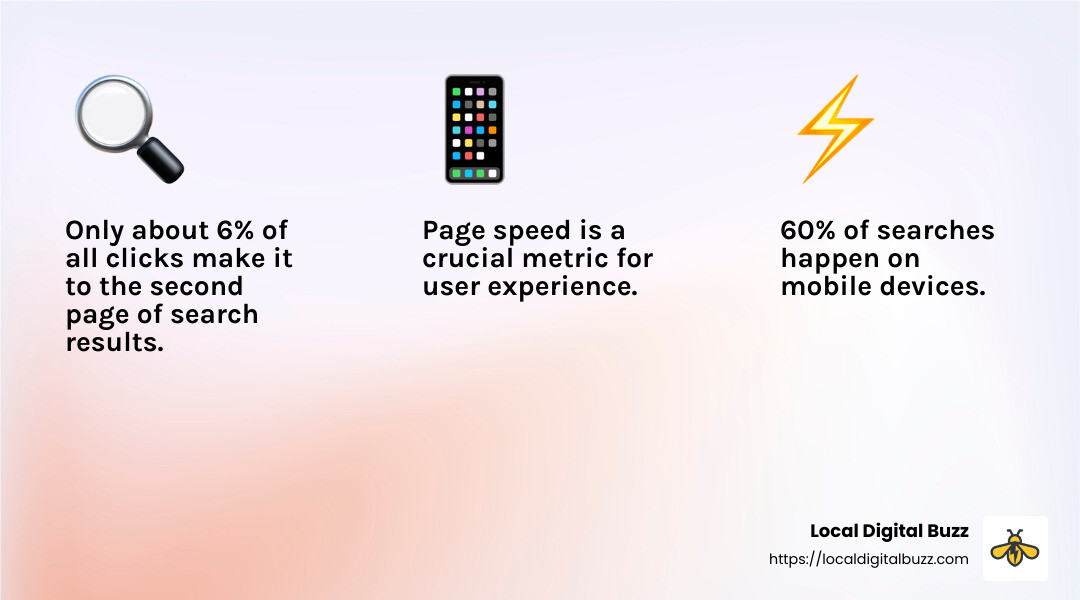
- Fast Loading Times: Ensure your pages load quickly. Slow sites can lose half their visitors in just a few seconds.
- Mobile Optimization: Make sure your site looks great on all devices. Almost 80% of people use their phones for web searches.
- Easy Navigation: Structure your site so users can find what they need quickly. Clear menus and search bars are essential.
Local SEO
Local SEO helps you attract clients in your area. It’s crucial for property management companies.
- Local Keywords: Use keywords that include your location, like “property management in [your city].”
- Google My Business: Keep your profile updated. This helps you appear in local search results and maps.
- Local Content: Write about local events or news related to property management. This shows you’re active in the community.
By focusing on content quality, user experience, and local SEO, you can improve your online presence and attract more clients. Up next, we’ll look at building high-quality backlinks to further strengthen your SEO strategy.
Step 4: Build High-Quality Backlinks
When it comes to property management search engine optimization, building high-quality backlinks is crucial. Backlinks act like votes of confidence from other websites, boosting your site’s authority and credibility.
Link Building
Link building is about getting other websites to link back to yours. These links signal to search engines that your site is trustworthy and relevant.
- Quality Over Quantity: It’s better to have a few links from reputable sites than many from low-quality ones. Aim for links from industry blogs, news sites, or educational institutions.
- Natural Linking: Encourage natural linking by creating valuable content. Guides, infographics, or case studies are more likely to be shared and linked to.
- Avoid Spammy Links: Stay away from buying links or using shady practices. Search engines can penalize your site for these.
Domain Authority
Domain authority (DA) is a score that predicts how well a site will rank on search engines. The higher your DA, the better your chances of ranking well.
- Increase DA: Focus on getting backlinks from sites with a higher DA than yours. This will boost your own site’s authority.
- Monitor Your DA: Use tools like Moz or Ahrefs to track your DA and see how it’s improving over time.
Outreach Strategies
Building backlinks often requires reaching out to other websites. Here are some effective outreach strategies:
- Leverage Current Partners: Start with people you already know, like vendors or local businesses. They may be willing to link to your site.
- Guest Blogging: Write articles for other blogs in your niche. This provides a natural way to include a link back to your site.
- Engage with Industry Experts: Connect with industry experts through LinkedIn or other platforms. Interviews or collaborations can lead to valuable backlinks.
- Participate in Local Events: Sponsor or attend local events. This can lead to mentions and links from local news sites or event pages.
By focusing on quality link building, improving your domain authority, and using smart outreach strategies, you can improve your property management search engine optimization efforts. Next, we’ll explore how to leverage social media and online reviews to boost your brand visibility.
Step 5: Leverage Social Media and Online Reviews
In property management search engine optimization, social media and online reviews are powerful allies. They not only boost your brand’s visibility but also improve trust and engagement with your audience.
Social Media Presence
Social media is more than just a place to share photos. It’s a platform to build a community and foster genuine interactions.
- Choose the Right Platforms: Not all platforms are created equal. Focus on those that align with your audience and industry. For property management, platforms like Facebook and LinkedIn can be especially effective.
- Consistency is Key: Regularly posting engaging content keeps your audience interested. Use a content calendar to plan and maintain consistency.
- Engage with Your Audience: Respond to comments, ask questions, and encourage discussions. This interaction builds a sense of community and loyalty.
Online Reviews
Online reviews are like digital word-of-mouth. They significantly impact your online reputation and influence potential clients.
- Encourage Positive Reviews: Ask satisfied clients to leave reviews on platforms like Google My Business. Positive reviews improve your credibility and can improve search rankings.
- Respond to All Reviews: Engage with both positive and negative reviews. Thank those who leave positive feedback and address concerns in negative reviews. This shows you value customer feedback and are committed to improving.
- Showcase Reviews: Highlight positive reviews on your website and social media. This not only boosts your reputation but also attracts new clients.
Boosting Brand Visibility
Combining social media and online reviews can significantly improve your brand visibility.
- Share User-Generated Content: Encourage clients to share their experiences and feature their content on your profiles. This not only provides authentic content but also widens your reach.
- Use Visual Content: Videos and images are highly engaging. Consider sharing virtual tours or client testimonials to captivate your audience.
- Leverage Local SEO: Use social media to share local content and engage with your community. This strengthens your local presence and can drive more traffic to your site.
By effectively leveraging social media and online reviews, you can boost your brand’s visibility and improve your property management search engine optimization efforts. This strategy not only builds trust but also attracts more potential clients to your business.
Frequently Asked Questions about Property Management SEO
What is SEO in property management?
SEO in property management is all about making your property management business more visible online. It involves optimizing your website and online content so that when people search for property management services, your business shows up in the search results. This is crucial because more visibility means more potential clients finding your services.
The focus is on organic traffic—traffic that comes to your website without you paying for ads. By using the right keywords and improving your site’s content and structure, you can attract people who are actively looking for what you offer.
What are the benefits of property management SEO?
Investing in property management search engine optimization brings several benefits:
- Increase in Traffic: The more visible your website is, the more people will visit it. Studies show that organic listings in search engines receive 90% of clicks, which means a well-optimized site can attract a lot of visitors.
- Lead Generation: With increased traffic comes more leads. People who find your site through search engines are often looking for solutions to their property management needs, making them potential clients.
- Higher Conversion Rates: When your site is optimized for the right audience, the chances of converting visitors into clients increase. A user-friendly site with valuable content can turn curious visitors into loyal customers.
- Cost-Effective Marketing: Unlike paid ads, which require ongoing investment, SEO is a long-term strategy. Once your site is well-optimized, it can continue to attract traffic and generate leads without additional costs.
How long does it take to see results from SEO?
SEO is a long-term strategy, and patience is key. It typically takes 6-8 months to start seeing significant results from your SEO efforts. This timeframe allows search engines to crawl and index your site, and for your content to gain traction.
Continuous monitoring and adjustments are crucial. SEO isn’t a one-time task; it’s an ongoing process. Regularly updating your content, responding to user behavior, and keeping up with search engine algorithms are essential for maintaining and improving your rankings.
By understanding the timeline and committing to a consistent SEO strategy, property managers can see substantial growth in organic traffic and lead generation over time.
Conclusion
In the competitive world of property management, having a strong online presence is crucial. At Local Digital Buzz, we understand the unique challenges property managers face in the digital landscape. Our custom solutions are designed to boost your visibility and attract the right audience to your services.
Our approach is simple yet effective. We combine cutting-edge technology with a human touch to create digital marketing strategies that work. From thorough keyword research to crafting engaging content, we ensure every aspect of your online presence is optimized for success.
One of our standout features is our all-in-one service model. Unlike others, we don’t lock you into long-term contracts. Instead, we focus on delivering results that align with your goals and budget. Whether it’s improving site speed, building quality backlinks, or enhancing your social media presence, our strategies are custom to drive traffic and boost your search engine rankings.
Investing in property management search engine optimization is investing in the future of your business. It’s about making sure your services are easily found by those who need them. With our expertise, you can confidently steer the digital world and achieve sustainable growth.
Looking to improve your property management SEO? Partner with Local Digital Buzz and experience the difference our custom solutions can make. Let’s work together to make your business more visible and successful.