Skip to main content


|
Listen to Todays Featured Blog ????
Getting your Trinity Audio player ready...
|
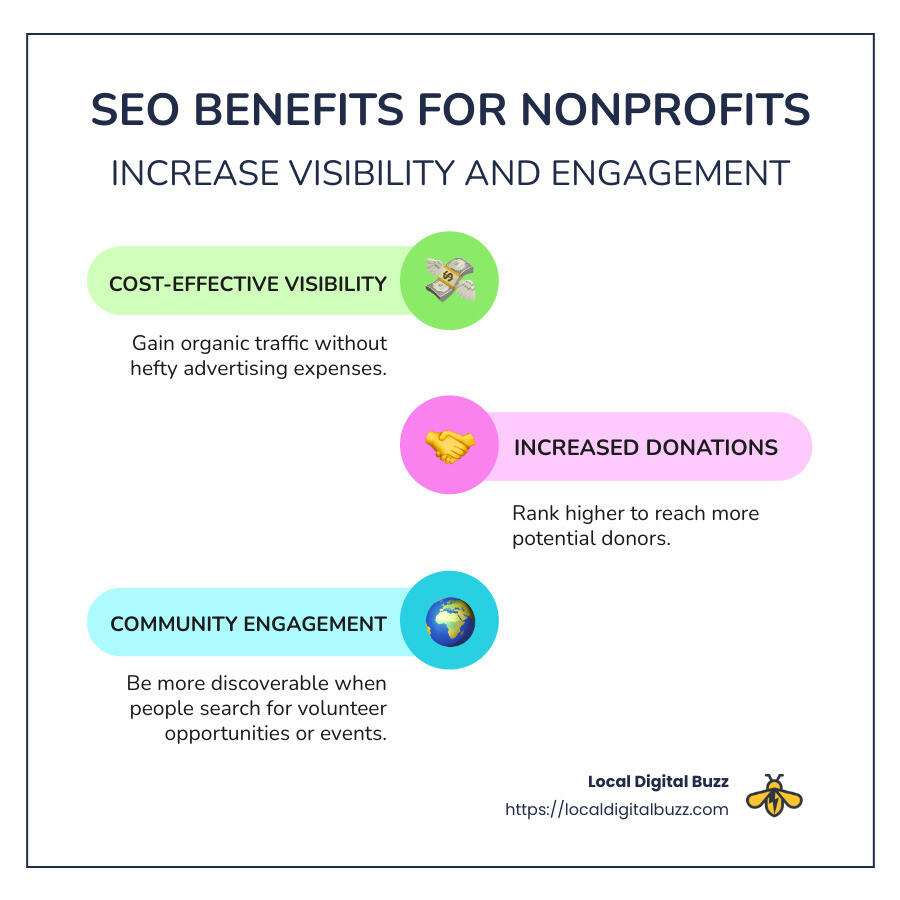
SEO for non-profit organizations is essential for boosting visibility and driving engagement without spending on ads. When online presence is vital, nonprofits can leverage SEO to increase reach, attract donors, and build community support. Here’s a quick take on why SEO matters for nonprofits:
- Cost-Effective Visibility: Gain organic traffic without hefty advertising expenses.
- Increased Donations: Rank higher to reach more potential donors.
- Community Engagement: Be more findable when people search for volunteer opportunities or events.
Now, let’s dive deeper into how you can master this.
My name is Joshua Fleming, a digital marketing expert passionate about helping nonprofits succeed online. From my extensive experience, I’ve seen how effective SEO for non-profit organizations can transform their growth and visibility.
Understanding SEO for Non-Profit Organizations
Search Engine Optimization (SEO) is a powerful tool for nonprofits looking to boost their online visibility and reach their target audience. At its core, SEO is about making your website more attractive to search engines like Google. This helps your site appear higher in search results when people look for topics related to your mission.
SEO Basics
Think of SEO as a way to communicate with search engines. You’re telling them what your website is about and why it should be shown to people searching for related topics. This involves optimizing various elements of your website, such as:
- Keywords: These are the terms people use when searching online. For nonprofits, this might include phrases like “volunteer opportunities” or “donate to charity.”
- Content Quality: High-quality, relevant content that addresses the needs of your audience.
- Technical Factors: Ensuring your website is fast, mobile-friendly, and easy to navigate.
Organic Traffic
Organic traffic refers to visitors who find your website through search engines without paid advertising. This type of traffic is highly valuable because it comes from people actively searching for information or services you offer. For nonprofits, organic traffic can lead to increased awareness, more volunteers, and even donations.
Search Engines
Search engines like Google use complex algorithms to decide which websites to show for a given search query. They consider factors such as relevance, authority, and user experience. By aligning your website with these factors, you can improve your chances of ranking higher in search results.
- Relevance: Ensure your content matches the search intent of your audience.
- Authority: Build authority by getting backlinks from reputable sites.
- User Experience: Make sure your website is easy to use and loads quickly.
Effective SEO for non-profit organizations means understanding and implementing these elements to make your website more visible and engaging. With the right strategy, you can attract more visitors, raise awareness, and support your mission. Let’s explore how to harness the full potential of SEO for your nonprofit.
Keyword Research for Nonprofits
When it comes to SEO for non-profit organizations, keyword research is a foundational step. It involves identifying the words and phrases that your target audience uses when searching for information related to your mission. This helps ensure that your content reaches the right people.
Keyword Strategy
A solid keyword strategy starts with understanding your goals. Are you looking to raise awareness, attract volunteers, or increase donations? Each goal may require a different set of keywords. For example, if you’re focused on fundraising, you might target phrases like “donate to [Your Cause]” or “support [Your Nonprofit].”
Long-Tail Keywords
Long-tail keywords are longer, more specific phrases. They often have lower search volume but are less competitive, making them easier to rank for. For instance, instead of just “charity,” you might use “local animal shelter volunteer opportunities.” These specific phrases can attract highly targeted traffic, which is more likely to convert into volunteers or donors.
Search Intent
Understanding search intent is crucial in keyword research. This means figuring out what people are hoping to find when they type a particular phrase into a search engine. Are they looking for information, ready to make a donation, or seeking volunteer opportunities?
For example, someone searching “how to volunteer at a food bank” likely wants actionable steps to get involved. By aligning your content with this intent, you can meet their needs and encourage them to engage with your nonprofit.
Tools and Techniques
Using tools like SEMrush or Google AdWords can help identify valuable keywords. These tools provide data on search volume and competition, helping you choose the best keywords for your strategy.
Additionally, analyzing top-ranking articles can offer insights into what works well in your niche. Look at the keywords these articles use and consider how you can incorporate similar terms in a way that aligns with your mission.
By focusing on a well-rounded keyword strategy, understanding search intent, and leveraging long-tail keywords, you can effectively improve your SEO for non-profit organizations. This targeted approach will help connect you with people who are genuinely interested in supporting your cause.
On-Page SEO Optimization
On-page SEO is all about optimizing individual pages on your website to improve search engine rankings and attract the right audience. Let’s explore three key elements: title tags, meta descriptions, and internal linking.
Title Tags
Title tags are like the headline of your webpage. They tell search engines and users what your page is about. Think of them as the first impression of your content.
Best Practices for Title Tags:
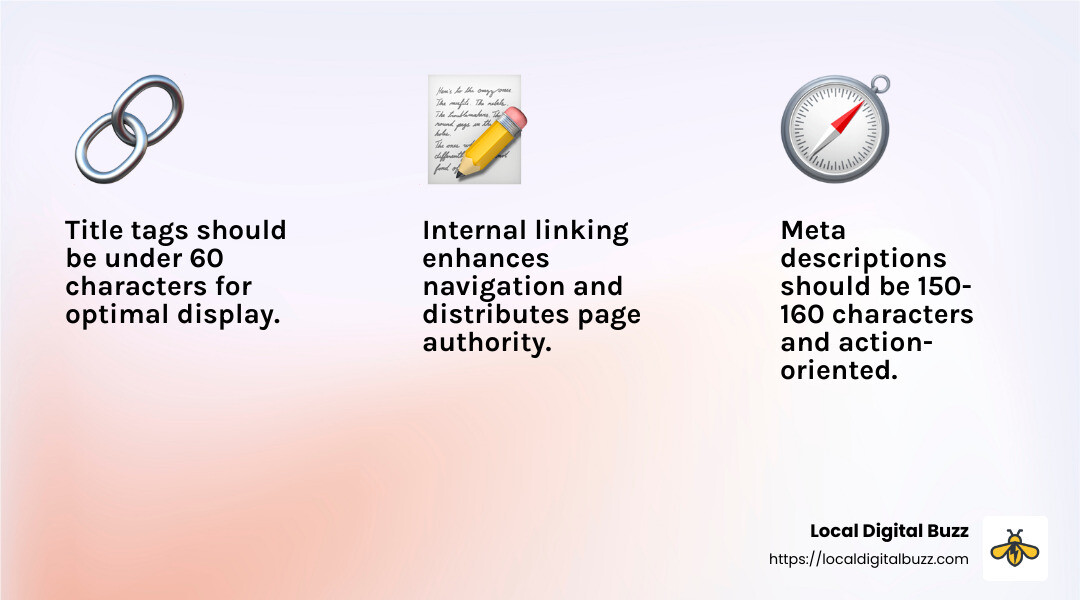
- Keep them under 60 characters to ensure they display correctly in search results.
- Include your primary keyword to improve relevance.
- Make them compelling to encourage clicks.
For example, if your nonprofit focuses on animal rescue, a good title tag might be: “Help Save Animals: Volunteer with Our Nonprofit.”
Meta Descriptions
Meta descriptions are short summaries that appear under the title tag in search results. They provide a brief overview of your page content and can influence click-through rates.
Creating Effective Meta Descriptions:
- Aim for 150-160 characters.
- Use action-oriented language to encourage clicks.
- Incorporate relevant keywords naturally.
For instance, “Join our nonprofit in our mission to rescue animals. Find volunteer opportunities and how you can help today.”
Internal Linking
Internal linking involves connecting different pages within your website. This helps both users and search engines steer your site and understand its structure.
Benefits of Internal Linking:
- Helps distribute page authority throughout your site.
- Encourages visitors to explore more content.
- Improves user experience by providing easy access to related information.
When writing a blog post about a recent event, link to your “Upcoming Events” page or a related article about past successes. This keeps users engaged and increases the time they spend on your site.
By focusing on these on-page SEO elements, you can boost your site’s visibility and attract more supporters to your cause. Effective use of title tags, meta descriptions, and internal linking not only helps search engines understand your content but also improves the user experience, making it easier for potential donors or volunteers to connect with your nonprofit.
Off-Page SEO and Link Building
Off-page SEO plays a crucial role in building your nonprofit’s online presence. It’s all about what happens outside your website to boost your authority and search traffic. Let’s explore backlinks, authority, and outreach.
Backlinks
Backlinks are links from other websites to your site. Think of them as votes of confidence. The more high-quality backlinks you have, the more credible your site appears to search engines like Google.
Why Backlinks Matter:
- They are a key ranking factor.
- Backlinks from reputable sites signal to Google that your content is valuable.
- They can drive referral traffic to your site.
For example, a nonprofit helping underserved students might gain backlinks by creating a comprehensive directory of grants, then asking educational blogs to link to it.
Authority
Authority refers to the trustworthiness and credibility of your website. High authority means search engines are more likely to rank your pages higher.
Building Authority:
- Focus on acquiring backlinks from high-authority sites.
- Ensure your content is high-quality and relevant to your audience.
- Engage with your community to build a recognized brand.
Consider this: Google’s algorithm pays close attention to brand recognition. When your nonprofit is seen as a leader in its field, it naturally attracts more backlinks and authority.
Outreach
Outreach is the process of connecting with other websites to earn backlinks. It’s about building relationships and sharing your mission.
Effective Outreach Strategies:
- Guest Blogging: Write articles for other websites and include a link back to your site.
- Unlinked Mentions: Find sites that mention your nonprofit but don’t link to it. Reach out and request a link.
- Broken Link Building: Identify broken links on relevant sites and suggest your content as a replacement.
Imagine your nonprofit is featured in a local news article. Reach out to the publication and request a link to your main website or a specific campaign page. This not only improves your SEO for non-profit organizations but also increases awareness and potential donations.
By focusing on off-page SEO strategies like backlinks, authority, and outreach, your nonprofit can improve its online visibility and reach more supporters. Next, we’ll dig into the technical aspects that ensure your site performs well across all devices.
Technical SEO for Nonprofits
Technical SEO is all about making sure your nonprofit’s website is easy to use and fast. This helps both visitors and search engines understand your site better. Let’s explore the key areas: page speed, mobile responsiveness, and site structure.
Page Speed
Page speed is crucial. A fast-loading website keeps visitors happy and helps you rank higher in search results. In fact, Google considers site speed a ranking factor. A slow site can turn visitors away before they even see your content.
How to Improve Page Speed:
- Compress Images and Videos: Smaller files load faster.
- Leverage Caching: Store data temporarily to speed up load times.
- Remove Unnecessary Plugins: Too many plugins can slow your site.
Use tools like Google’s PageSpeed Insights to check your site’s speed and get suggestions for improvement. A faster site can lead to more visitors staying longer and engaging with your content.
Mobile Responsiveness
With more than half of all web searches coming from mobile devices, mobile responsiveness is non-negotiable. Google uses the mobile version of your site to determine rankings, so a good mobile experience is essential.
Steps to Ensure Mobile Responsiveness:
- Responsive Design: Your site should adjust to fit any screen size.
- Avoid Flash: Many devices don’t support Flash, and it can slow down your site.
- Optimize for Touch: Make sure buttons are easy to tap and text is readable without zooming.
Use Google’s Mobile-Friendly Test to see how well your site performs on mobile devices. A mobile-friendly site not only improves your SEO for non-profit organizations but also ensures that potential supporters can access your site easily from anywhere.
Site Structure
A well-organized site structure helps search engines crawl your site and find your content. It also makes it easier for visitors to steer.
Tips for a Good Site Structure:
- Logical Hierarchy: Organize your content in a clear, logical way.
- Internal Linking: Connect related pages to help users and search engines find more of your content.
- Sitemaps: Create and submit a sitemap to Google to ensure all important pages are indexed.
Think of your site structure as a map. It guides both visitors and search engines to your most valuable content. A clear structure not only boosts your rankings but also improves user experience.
By focusing on page speed, mobile responsiveness, and site structure, your nonprofit can improve its online presence and reach more people.
Next, we’ll answer some common questions about SEO for nonprofits, including how it can boost visibility and donations.
Frequently Asked Questions about SEO for Nonprofits
What is SEO for Non-Profit Organizations?
Search Engine Optimization (SEO) is the practice of optimizing your website to increase its visibility on search engines like Google. For non-profit organizations, SEO is crucial because it helps attract organic traffic without the need for paid ads. This means more people can find out about your cause, services, and opportunities for involvement.
How Can Nonprofits Benefit from SEO?
Nonprofits can gain significant advantages from SEO. Here are some key benefits:
- Increased Visibility: By appearing higher in search results, your nonprofit is more likely to be seen by potential supporters, volunteers, and donors. According to NP Tech for Good, only 37% of nonprofits have dedicated SEO strategies, which means there’s a huge opportunity to stand out.
- More Donations: With better visibility, more people can learn about your fundraising efforts. This can lead to increased donations. A well-optimized site can guide visitors to donation pages with ease.
- Awareness and Engagement: SEO helps spread awareness about your mission and activities. By ranking for relevant keywords, you can engage with a broader audience interested in your cause.
What Are Common SEO Mistakes Nonprofits Make?
While SEO offers many benefits, nonprofits often fall into some common pitfalls:
- Keyword Stuffing: Overloading your content with keywords can harm your rankings. It’s important to use keywords naturally and focus on providing valuable information.
- Poor Content Quality: Content should be relevant, informative, and engaging. Nonprofits need to prioritize creating high-quality content that resonates with their audience, as Moz found that educational content can increase traffic by 74%.
- Neglecting Mobile Optimization: With most searches happening on mobile devices, neglecting mobile responsiveness can hurt your rankings. Ensure your site is mobile-friendly to reach supporters wherever they are.
By avoiding these mistakes and implementing effective SEO strategies, nonprofits can improve their online presence and achieve their goals.
Next, let’s explore how on-page SEO optimization can further improve your nonprofit’s visibility and engagement.
Conclusion
Having a strong online presence is crucial for the success of non-profit organizations. This is where Local Digital Buzz comes into play. We offer comprehensive digital marketing services custom specifically for nonprofits, focusing on enhancing visibility, driving engagement, and increasing support.
Our approach is unique. We combine cutting-edge technology with a human touch to craft customized solutions that fit the specific needs of your organization. This means you get a strategy that’s not only effective but also aligns perfectly with your mission and goals.
Why choose Local Digital Buzz?
- Personalized Strategies: We understand that every nonprofit is different. That’s why we create bespoke digital marketing plans that cater to your unique needs and objectives.
- No Long-Term Contracts: We believe in earning your trust through results, not binding contracts. Our flexible approach ensures you can adapt your strategy as your organization grows.
- All-in-One Services: From SEO and content creation to social media management and lead generation, we offer everything you need to succeed online under one roof.
SEO for non-profit organizations is not just about boosting search engine rankings. It’s about building awareness and demand for your cause. With Local Digital Buzz, you can be confident that your digital marketing efforts are in expert hands, allowing you to focus on what truly matters—making a positive impact in the world.
Ready to lift your nonprofit’s digital presence? Find our services and see how we can help you achieve your goals.