Skip to main content


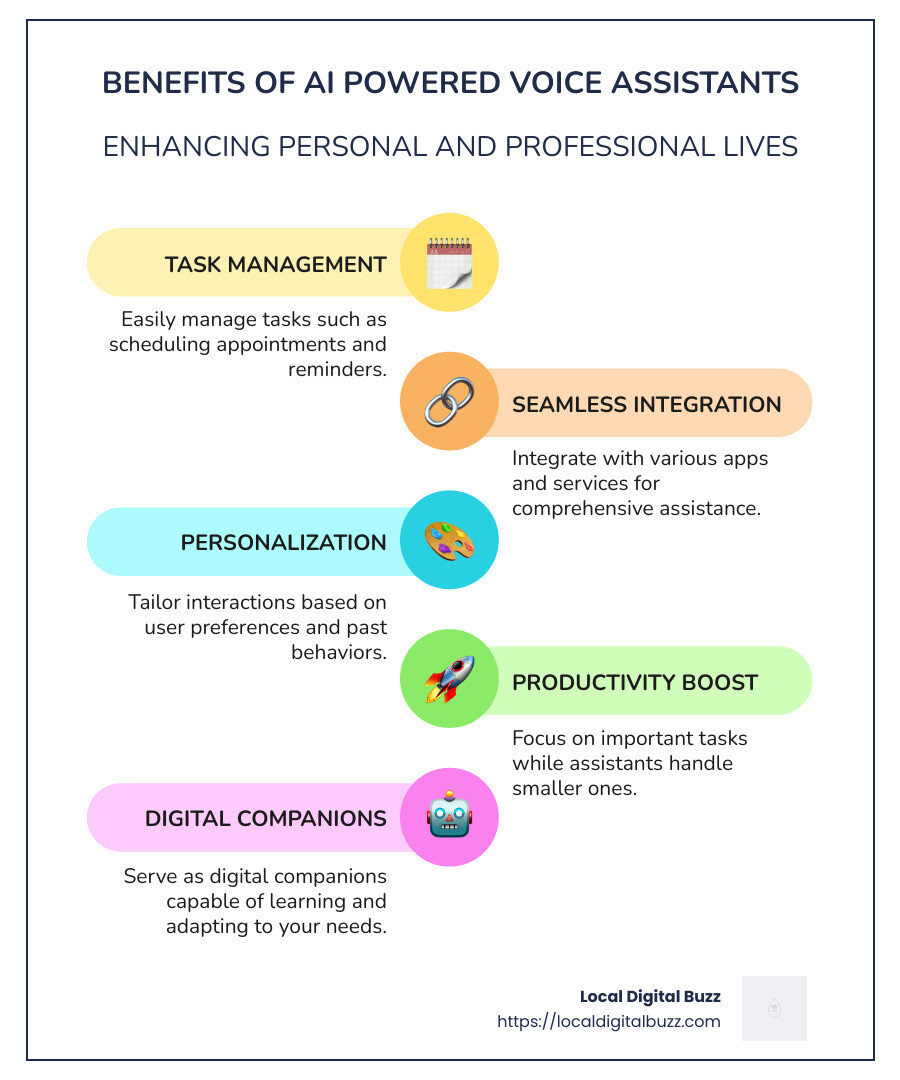
AI powered voice assistant technologies are changing how we interact with the digital world. These smart helpers are not just about responding to questions or setting reminders; they bring personalization and productivity to a whole new level. Think of them as digital companions capable of learning and adapting to meet your unique needs.
Here’s a quick rundown of what you can expect from an AI powered voice assistant:
- Easy task management: From scheduling appointments to managing day-to-day tasks.
- Seamless integration: Connect with various apps and services for comprehensive assistance.
- Personalization: Tailor interactions based on user preferences and past behaviors.
- Improved productivity: Allow you to focus on work while they handle the small stuff.
AI assistants are becoming essential tools in our personal and professional lives, enhancing how we organize, plan, and interact with technology.
My name is Joshua Fleming, and I am passionate about leveraging technology to simplify business operations. With experience in digital marketing and branding, I recognize how an AI powered voice assistant can transform communication and efficiency.
Understanding AI Powered Voice Assistants
AI powered voice assistants are revolutionizing how we communicate with technology. They’re more than just fancy gadgets; they’re becoming indispensable tools in our daily routines. But how do they work? Let’s break it down.
Natural Language Processing (NLP)
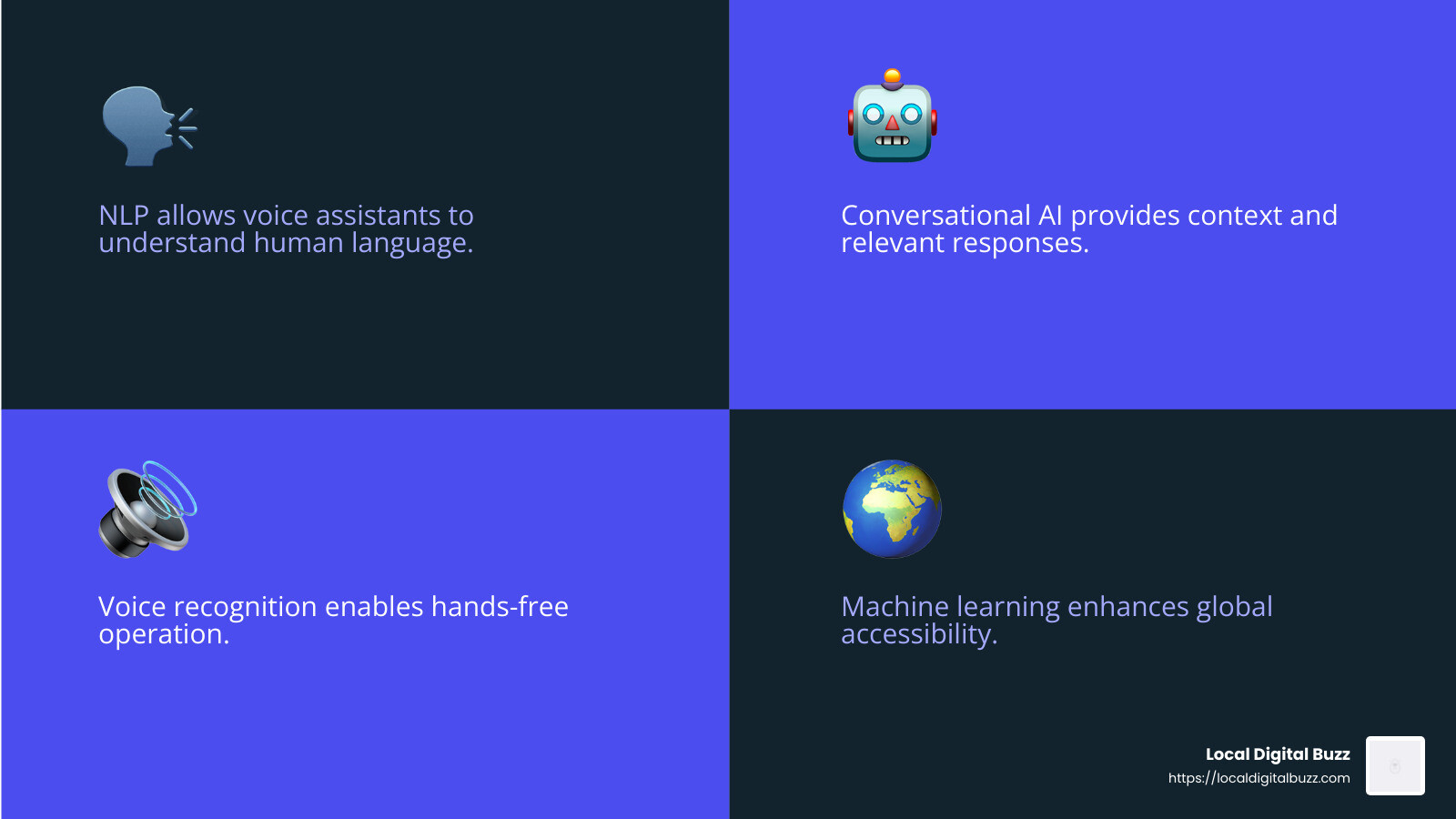
At the heart of every AI powered voice assistant is Natural Language Processing. NLP is what allows these assistants to understand human language. When you speak to an assistant, NLP helps it convert your words into data the system can understand and respond to.
Imagine asking your assistant, “What’s the weather like today?” The assistant uses NLP to interpret your question and fetch the weather data. It’s like having a conversation with a friend who knows everything.
Conversational AI
Conversational AI is what makes these interactions feel natural. It enables the assistant to understand context and provide relevant responses. This is crucial for making the conversation flow smoothly.
For example, if you ask, “What’s on my schedule today?” and then follow up with, “And what about tomorrow?” the assistant uses conversational AI to understand that “tomorrow” refers to your schedule for the next day. This ability to maintain context is what sets advanced assistants apart from basic chatbots.
Voice Recognition
Voice recognition is the technology that allows assistants to identify and respond to your voice. It’s what makes hands-free operation possible. When you say, “Hey, assistant,” it recognizes your voice and activates to assist you.
This technology is constantly improving. With advancements in machine learning, voice recognition is becoming more accurate and can even understand different accents and languages. This makes the assistant more accessible to a global audience.
Understanding these core technologies—NLP, conversational AI, and voice recognition—helps us appreciate the sophistication behind AI powered voice assistants. They are not just tools but partners in enhancing our productivity and simplifying our lives.
Next, we’ll explore some of the top AI powered voice assistants in the market and what makes each of them unique.
Top AI Powered Voice Assistants
Google Assistant
Google Assistant is a standout in AI powered voice assistants. Found on Android devices and Google smart speakers, it’s known for its seamless integration with Google’s ecosystem. From setting reminders to controlling smart home devices, Google Assistant is designed to make life easier. Its ability to understand context and provide personalized responses makes it a favorite for many users.

Amazon Alexa
Amazon Alexa is another major player, especially popular with smart home enthusiasts. Available on Amazon Echo devices, Alexa can control everything from lights to thermostats. Its versatility comes from the vast array of “skills” it can learn, thanks to third-party integrations. This makes Alexa not just a voice assistant, but a central hub for managing your smart home.

Apple Siri
Apple Siri is the voice assistant for Apple devices like iPhones and iPads. Siri is known for its intuitive voice command capabilities and seamless integration with Apple’s ecosystem. Whether you want to send a message, set a reminder, or get directions, Siri is there to help. Its ability to work across all Apple devices makes it a convenient choice for Apple users.

Microsoft Cortana
Microsoft Cortana focuses on productivity and integration, particularly within the Windows environment. Cortana can help manage your calendar, set reminders, and answer queries, making it a handy tool for professionals. Although its presence has diminished in recent years, Cortana’s integration with Windows apps ensures it remains a useful assistant for those in the Microsoft ecosystem.

Kyutai Moshi
Kyutai Moshi is an exciting newcomer in the field of voice AI, offering real-time, lifelike conversations. Unlike traditional assistants, Moshi is designed to provide natural interactions, thanks to its advanced language models. This makes it a promising option for those seeking a more human-like assistant experience.
These AI powered voice assistants are changing how we interact with our devices. Each offers unique features and capabilities, catering to different user needs and preferences. Whether you’re looking for smart home management, productivity tools, or lifelike conversations, there’s an assistant out there for you.
Next, we’ll dive into the benefits of using AI powered voice assistants and how they can improve productivity and customer experience.
Benefits of AI Powered Voice Assistants
Boosting Productivity
AI powered voice assistants can take care of routine tasks, freeing up time for more important work. Imagine having someone to set reminders, schedule meetings, or even send emails, all with a simple voice command. This means more time for creativity and strategic thinking.
Cutting Costs
With AI assistants handling customer service tasks, businesses can save on staffing costs. These assistants can answer common questions, process orders, and even troubleshoot issues. This reduces the need for large customer service teams, leading to significant savings.
Unlike humans, AI powered voice assistants never sleep. They are available around the clock to assist with tasks or answer questions. This is especially valuable for businesses that operate globally, ensuring that customer inquiries are addressed no matter the time zone.
Enhancing Customer Experience
AI assistants provide quick and accurate responses, improving the overall customer experience. They can personalize interactions based on previous conversations, making customers feel valued and understood. This level of service can lead to higher customer satisfaction and loyalty.
These benefits make AI powered voice assistants a valuable tool for both individuals and businesses. They improve productivity, reduce costs, and provide excellent customer service, all while being available 24/7.
Next, we’ll explore how you can create your own AI powered voice assistant, focusing on technology stack, data collection, and user interface design.
How to Create Your Own AI Powered Voice Assistant
Creating your own AI powered voice assistant might sound like a daunting task, but with the right approach, it’s entirely achievable. Let’s break it down into manageable pieces: technology stack, data collection, user interface, and voice recognition.
Technology Stack
The first step is selecting the right technology stack. This includes the software and tools you’ll use to develop your assistant. Key components often include:
- Machine Learning Frameworks: These are essential for training your AI. TensorFlow and PyTorch are popular choices for building models that can understand and respond to voice commands.
- Natural Language Processing (NLP): This technology helps your assistant understand and process human language. Libraries like spaCy and NLTK can be useful here.
- Speech-to-Text (STT) and Text-to-Speech (TTS): These technologies convert spoken words into text and vice versa, enabling seamless communication. Google’s STT and TTS APIs are robust options .
Data Collection
Data is the fuel for any AI system. Collecting and managing data effectively is crucial for training your voice assistant. Consider these points:
- Voice Samples: Gather diverse voice samples to train your assistant on different accents, dialects, and speech patterns. This improves accuracy and user experience.
- User Interactions: Continuously collect data from user interactions to refine and improve your assistant’s responses over time. This helps in making the assistant more personalized and intuitive.
User Interface
A user-friendly interface is key to a successful voice assistant. It should be intuitive and easy to interact with. Consider these elements:
- Visual Feedback: Provide visual cues to indicate when the assistant is listening or processing a command. This improves user trust and engagement.
- Simple Design: Keep the design clean and straightforward, focusing on functionality over complexity. This makes it easier for users to steer and interact with the assistant.
Voice Recognition
Finally, voice recognition is the heart of any voice assistant. It ensures that the assistant accurately understands and processes user commands. Focus on the following:
- Accuracy: Use advanced algorithms and models to improve voice recognition accuracy. This is crucial for delivering reliable and effective responses.
- Noise Handling: Implement noise-cancellation techniques to ensure the assistant can function well in various environments, whether it’s a quiet office or a busy street.
By carefully considering each of these components, you’ll be well on your way to creating a powerful and effective AI powered voice assistant. This technology can transform how users interact with devices, offering a seamless and intuitive experience.
Next, we’ll dive into some frequently asked questions about AI powered voice assistants, exploring topics like the best AI voice assistant and how AI can be used for personal tasks.
Frequently Asked Questions about AI Powered Voice Assistants
What is the best AI voice assistant?
Choosing the best AI powered voice assistant often depends on individual needs and preferences. Google Assistant is highly regarded for its integration with Android devices and smart speakers, offering robust functionality and natural language processing capabilities. It excels in understanding context and providing personalized responses. Amazon Alexa is well-known for its smart home integration and the wide range of skills available through third-party developers, making it easy to control devices like lights and thermostats.
Both assistants have their unique strengths, so the “best” choice depends on your specific requirements. Whether you’re managing a smart home or seeking quick answers, both Google Assistant and Amazon Alexa provide powerful solutions.
Can you use AI as a personal assistant?
Yes, AI virtual assistants are increasingly capable of handling personal tasks. They can assist with scheduling appointments, sending reminders, and managing emails, allowing you to focus on more important activities. Otter.ai, for example, is an AI assistant that specializes in transcribing meetings and notes, making it a valuable tool for professionals looking to streamline their workflows.
Integration is crucial. Many AI assistants can connect with other apps and services to offer a seamless experience, working alongside your calendar, email, and even social media accounts to keep everything in sync. The growing capabilities of AI assistants make them invaluable for personal productivity.
What is AI powered writing assistant?
An AI powered writing assistant is a tool designed to assist with writing tasks, using generative AI to offer suggestions, correct grammar, and even compose text. Grammarly is a popular example, providing real-time feedback on writing style, grammar, and tone. It’s widely used by writers, students, and professionals to enhance their writing quality.
These tools can also help overcome writer’s block by suggesting ideas and generating content based on a few prompts. They are particularly useful for creating polished documents, emails, and social media posts. As generative AI continues to advance, writing assistants are becoming more sophisticated, offering personalized recommendations that align with the user’s unique voice and style.
With these FAQs covered, let’s explore the broader impact of AI powered voice assistants on productivity and customer experience.
Conclusion
As we’ve seen, AI powered voice assistants are changing how we interact with technology, making tasks easier and more efficient. At Local Digital Buzz, we understand the potential of these tools to improve business operations and customer experiences.
Our approach is all about creating custom solutions custom to your unique needs. Whether you’re a small business looking to improve your online presence or a larger enterprise aiming for greater digital engagement, we’re here to help. Our technology-powered, human-operated strategies ensure that you get measurable results without long-term commitments.
By integrating AI voice assistants into your digital marketing strategy, you can boost productivity, streamline customer interactions, and offer 24/7 availability. This not only saves time and costs but also improves customer satisfaction by providing quick and accurate responses.
Ready to harness the power of AI in your business? Explore our virtual assistant services and see how Local Digital Buzz can help you grow. With flexible packages and a commitment to your success, we’re your partner in achieving impactful digital change.